

The Vagus Nerve: The Missing Link to Balance, Energy and Ease in Midlife
As women in midlife, our bodies are changing physically, hormonally, neurologically, emotionally. Many of us are doing all the right things yet still feel tired, foggy, anxious, inflamed or disconnected from ourselves.
This is not weakness.
This is biology.
At the heart of it all lies one powerful, often overlooked pathway to wellbeing: your vagus nerve.
Why Your Vagus Nerve Matters More Than Ever After 45
Your brain’s primary job is survival. It is constantly scanning your environment, your body and your emotional landscape for threat. Physical stress, emotional trauma, hormonal shifts, poor sleep, inflammation all of these influence how your brain responds.
The vagus nerve, your tenth cranial nerve, plays a central role in this process. It is the main nerve of your parasympathetic nervous system the part responsible for resting, digesting, healing and restoring balance.
When your vagus nerve is stimulated and functioning well, your body feels safe enough to soften, repair and thrive.
When it’s underactive, you may feel stuck in survival mode.
5 Essential Facts About the Vagus Nerve
When stimulated, it helps prevent inflammation a key issue for many women in midlife.
It’s the main communication link between your brain and your gut, influencing digestion, immunity and mood.
It supports your breathing, helping regulate calm, efficient breath patterns.
It returns you to balance after stress, allowing your nervous system to reset.
It supports memory and cognitive function, helping counter brain fog and mental fatigue.
Brain Fog, Inflammation and Chronic Stress
If you’re experiencing brain fog, it’s often a sign of neuroinflammation excess immune activity in the brain involving activated microglia, cytokines and stress-related biochemicals. This is frequently driven by chronic stress.
You might also notice:
Memory problems
Mood changes or anxiety
Balance issues
Difficulty focusing
Low energy despite sleeping
Poor concentration
Frequent headaches or migraines
This is why I return, time and again, to vagus nerve activation as a first port of call. It’s your body’s built-in rest and reset system.
Pilates, Somalates® and the Art of Nervous System Regulation
This is where Pilates and Somalates® become so powerful especially in midlife.
Slow, mindful movement.
Rhythmic, conscious breathing.
Gentle strength, spinal mobility and embodied awareness.
These practices don’t just condition muscles they stimulate the vagus nerve, calm the stress response and help your body remember how to feel safe again.
Somalates® in particular works at the intersection of neuroscience, somatics and Pilates, supporting your nervous system while restoring ease, balance and confidence in your body.
Simple Ways to Stimulate Your Vagus Nerve at Home
There are many beautifully accessible ways to support your vagus nerve no equipment required:
Singing or humming (vibration directly stimulates the nerve)
Laughing and smiling more
Practising gratitude
Mindfulness and meditation
Green therapy- time in nature
Walking barefoot
Listening to binaural beats
Getting morning sunlight
Drinking enough water
Reducing EMF exposure- switch off devices two hours before bed and read a book instead
Nourishing foods- grass-fed meats, organic free-range eggs, avocado, coconut and olive oil, nuts and seeds
Your body, mind and soul are interconnected. Nourishing all three is the true art of being well.
A Gentle Invitation
If you’re ready to feel calmer, clearer and more at home in your body I’d love to support you.
✨ Join a Pilates or Somalates® class and experience how nervous-system-led movement can restore balance, strength and vitality in midlife: https://www.serendipitywellness.co.uk/classes
✨ Sign up for the Refuel Newsletter for science-backed insights, practical tools and soulful guidance to help you thrive not just survive in this season of life: https://www.serendipitywellness.co.uk/refuel-join
You don’t need to push harder.
You need to soften, listen and restore.
Your nervous system and your vagus nerve will thank you.
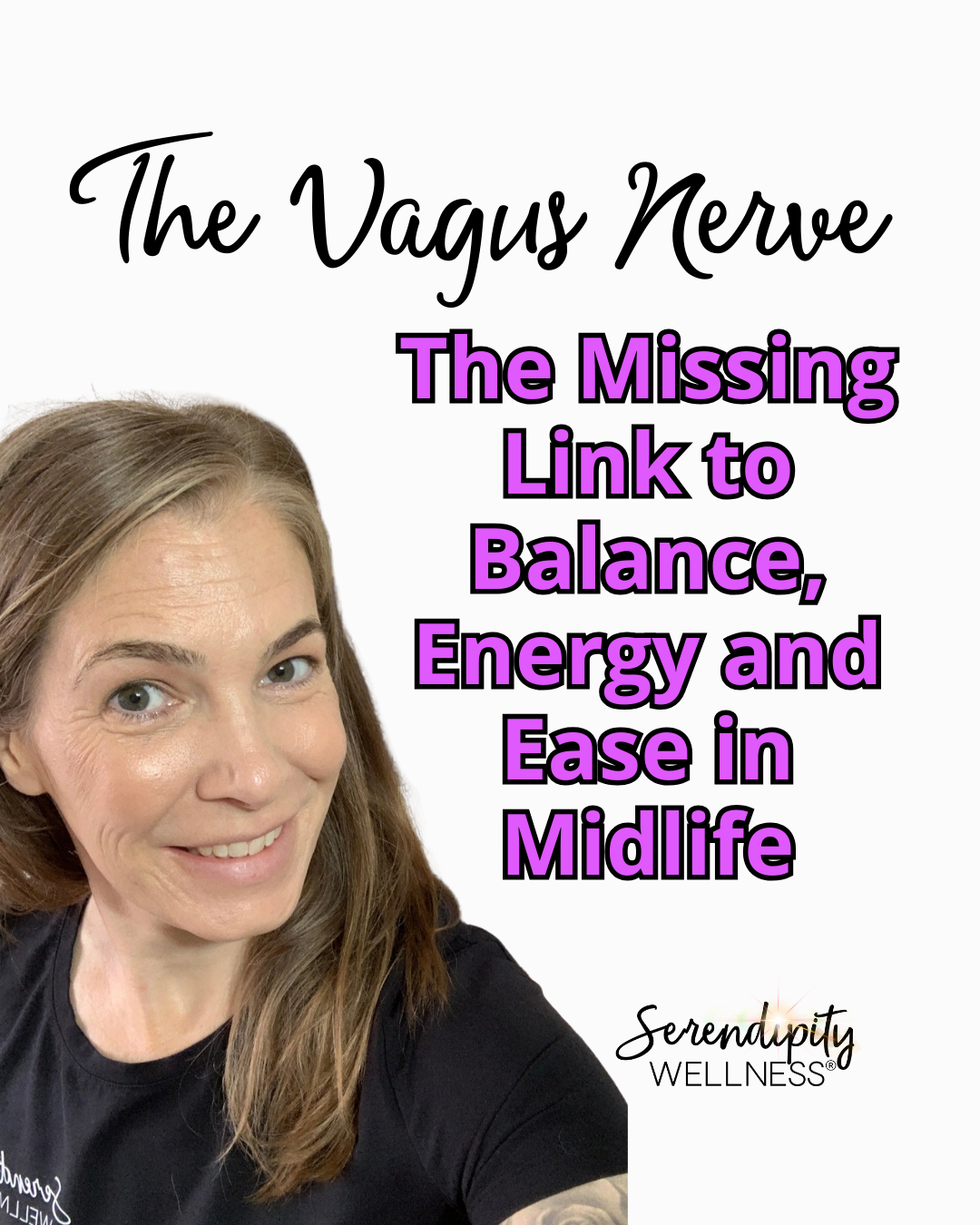
Tracy Richardson MSc is a movement and wellness specialist with a background in therapy, Pilates, and wellbeing, she combines evidence-based practice with a nurturing, mindful approach. Tracy’s mission is to empower individuals to move with awareness, release tension, and cultivate sustainable health, strength, and inner calm. When she’s not teaching or writing, you’ll often find her walking her dog, practising Pilates, or sipping a calming cup of tea
