

Why does my shoulder suddenly hurt when I’ve done nothing to injure it? 🤔
Why does my shoulder suddenly hurt when I’ve done nothing to injure it? 🤔
One of the most common complaints I hear from women over 45 is:
“I can’t fasten my bra.”
“Reaching into the back seat hurts.”
“I can’t lift my arm properly anymore.”
Often, they’re experiencing the early signs of Frozen Shoulder (Adhesive Capsulitis).
As a Sports Therapist and Pilates Teacher, I’ve seen this become increasingly common during perimenopause and menopause.
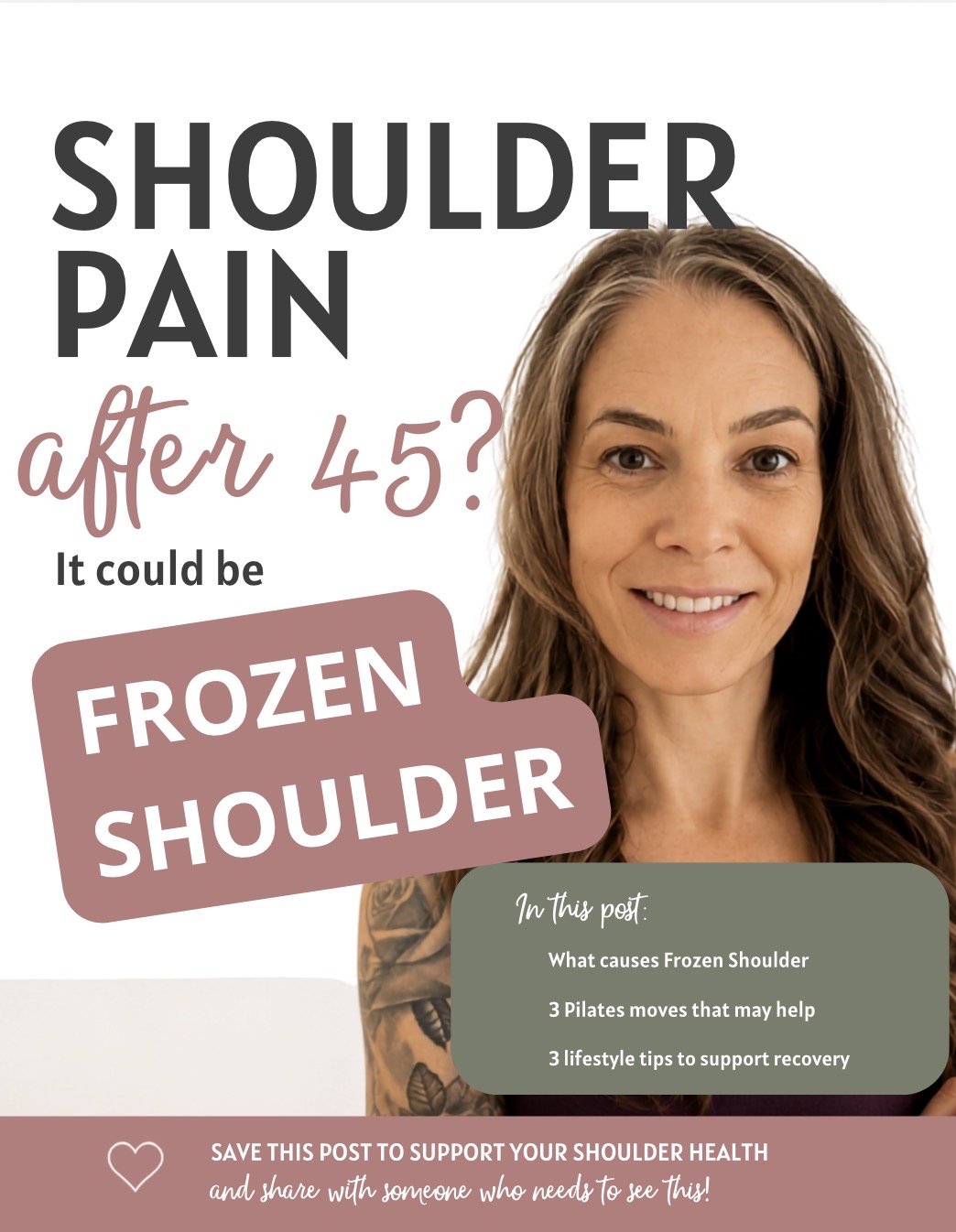
What is Frozen Shoulder?
Frozen shoulder occurs when the connective tissue surrounding the shoulder joint becomes inflamed, thickened, and tight, restricting movement and causing pain.
It typically develops gradually and can progress through three stages:
❄️ Freezing Stage – Increasing pain and stiffness.
❄️ Frozen Stage – Less pain but significant restriction in movement.
❄️ Thawing Stage – Movement slowly begins to return.
The frustrating part? It can last months or even years.
Why does it happen?
Whilst it can occur following injury or surgery, many women develop frozen shoulder without any obvious cause.
Research suggests hormonal changes during perimenopause and menopause may play a role. As oestrogen declines, connective tissues throughout the body can become less resilient and more prone to inflammation.
Other risk factors include:
✔️ Diabetes
✔️ Thyroid disorders
✔️ Previous shoulder injury
✔️ Prolonged periods of immobility
3 Pilates movements that may help
Always work within a comfortable range and seek professional advice if symptoms are severe.
1️⃣ Shoulder Rolls
Gentle circular movements help improve circulation and reduce tension around the neck and shoulders.
2️⃣ Arm Circles
Small controlled circles encourage mobility within the shoulder joint without excessive strain.
3️⃣ Thoracic Rotation
Many shoulder issues are worsened by stiffness through the upper back. Gentle spinal rotation can improve overall movement mechanics and reduce compensation patterns.
3 Lifestyle Tips
🌿 Prioritise Daily Movement
Avoid completely resting the shoulder unless advised by a healthcare professional. Gentle movement often helps prevent further stiffness.
🥩 Support Tissue Health
Focus on adequate protein intake, colourful vegetables, healthy fats and staying hydrated to support recovery and tissue repair.
😴 Improve Sleep Quality
Pain often feels worse when we’re tired. Creating a consistent bedtime routine and managing stress can help improve both sleep and recovery.
The good news…
Movement is medicine.
Whilst Pilates isn’t a cure for frozen shoulder, it can be an incredibly valuable tool for maintaining mobility, improving posture, reducing muscular tension and helping you move with greater confidence throughout the recovery process.
Have you ever experienced frozen shoulder?
If so, what was the first sign that something wasn’t quite right? Let me know below. 👇
Tracy Richardson MSc
Founder, Serendipity Wellness®
Pilates Teacher | Somalates® Creator | Wellness Educator
About Serendipity Wellness®
Serendipity Wellness provides Pilates classes, wellness coaching, women’s health support, and holistic wellbeing services across Warwickshire. Founded by Tracy Richardson, the business supports women through movement, mindfulness, midlife wellness, and community connection.
Share This post:
📩 Join The Refuel Newsletter
If you’d like tips, support and a weekly Pitstop to refuel, delivered without noise or trends… join The Refuel.
Each week, I share practical tools to help you move well, recover better, and support your body through change.
Tracy Richardson MSc is a movement and wellness specialist with a background in therapy, Pilates, and wellbeing, she combines evidence-based practice with a nurturing, mindful approach. Tracy’s mission is to empower individuals to move with awareness, release tension, and cultivate sustainable health, strength, and inner calm. When she’s not teaching or writing, you’ll often find her walking her dog, practising Pilates, or sipping a calming cup of tea.
