

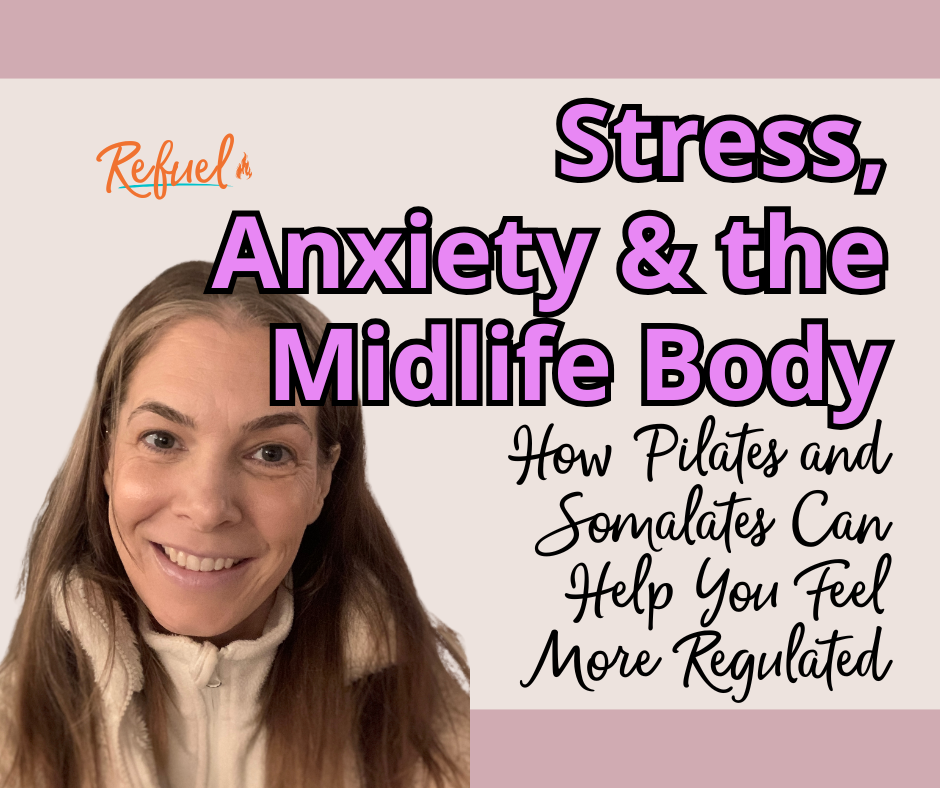
Stress, Anxiety, and the Midlife Body
How Pilates and Somalates Can Help You Feel More Regulated and at Ease
Stress and anxiety in midlife often feel different from earlier in life.
They’re not always loud or obvious. Instead, they can show up as low-level tension, poor sleep, racing thoughts, fatigue, irritability, or a sense that your body is constantly “on edge” even when life appears manageable on the surface.
For many women in their 40s and 50s, this isn’t a personal failure or a lack of resilience. It’s the result of real physiological change.
Hormonal shifts, cumulative stress, and a nervous system that has spent years responding to responsibility, pressure, and pace all play a role. This is why approaches that rely on pushing harder or “thinking your way out of it” often fall short.
What the body needs is regulation not more effort.
Why Stress and Anxiety Increase in Midlife
During perimenopause and menopause, fluctuations in oestrogen and progesterone directly affect the nervous system. These hormones help regulate mood, sleep, and stress responses. As they change, the body can become more sensitive to stressors that previously felt manageable.
Many women notice:
Heightened anxiety or worry
Difficulty switching off
Poor sleep or early waking
Muscle tension or jaw clenching
A sense of being constantly alert
At the same time, life demands often increase work, family, ageing parents, health concerns while recovery time decreases.
This combination leaves the nervous system spending too much time in fight-or-flight mode.
Why the Nervous System Is the Key
Stress and anxiety are not just thoughts. They are body states.
When the nervous system perceives threat emotional, physical, or hormonal it prepares the body for action by increasing heart rate, tightening muscles, and speeding up breathing.
Over time, this becomes the default setting.
The solution isn’t to eliminate stress entirely (which isn’t realistic), but to help the nervous system learn how to down-shift again.
This is where movement-based, body-led practices such as Pilates and Somalates become so powerful.
Pilates: Creating Safety Through Strength and Breath
Pilates is often thought of as physical exercise, but at its core it is a nervous system practice.
The slow, controlled movements, focus on alignment, and breath awareness send signals of safety to the body. Over time, this helps reduce habitual tension and improve stress resilience.
Pilates supports stress and anxiety by:
Encouraging slower, more regulated breathing
Reducing muscle guarding and bracing
Improving body awareness and confidence
Building strength without triggering overwhelm
Rather than exhausting the body, Pilates helps it feel supported which is especially important when anxiety is already high.
Somalates®: Listening to the Body, Not Forcing It
Somalates® takes this one step further.
It combines Pilates principles with somatic awareness focusing on how movement feels rather than how it looks. The emphasis is on sensing, releasing, and responding to the body’s internal signals.
This approach is particularly supportive for women who:
Feel disconnected from their bodies
Hold stress as tension or pain
Find traditional exercise overstimulating
Have tried relaxation techniques that didn’t “stick”
Somalates helps the nervous system gently recalibrate by allowing the body to complete patterns of tension and release that may have been held for years.
It’s not about pushing through.
It’s about letting go safely.
Why This Approach Feels Different
Tracy’s work at Serendipity Wellness is rooted in understanding that stress and anxiety are not problems to be fixed, but signals to be understood.
By combining:
Thoughtful Pilates programming
Somatic principles
Breath-led movement
A calm, non-judgemental environment
clients are supported at the level of both body and nervous system.
This creates change that is often subtle but deeply felt better sleep, less tension, improved mood, and a greater sense of ease in everyday life.
Small Shifts, Lasting Change
One of the most powerful aspects of Pilates and Somalates is that they don’t demand long sessions or dramatic lifestyle changes.
Even small, regular practices can:
Reduce baseline stress levels
Improve emotional regulation
Increase resilience to daily pressures
Help you feel more present in your body
Over time, the nervous system learns that it doesn’t need to stay on high alert.
The Takeaway
Stress and anxiety in midlife are not signs that something is wrong with you.
They are signals that your body is asking for a different kind of support.
Pilates and Somalates offer a way to meet that need through movement that builds strength, awareness, and safety rather than pressure and depletion.
This isn’t about escaping stress.
It’s about learning how to come back to yourself.
📩 Join The Refuel Newsletter
If you’d like tips, support and a weekly Pitstop to refuel, delivered without noise or trends… join The Refuel.
Each week, I share practical tools to help you move well, recover better, and support your body through change.
Tracy Richardson MSc is a movement and wellness specialist with a background in therapy, Pilates, and wellbeing, she combines evidence-based practice with a nurturing, mindful approach. Tracy’s mission is to empower individuals to move with awareness, release tension, and cultivate sustainable health, strength, and inner calm. When she’s not teaching or writing, you’ll often find her walking her dog, practising Pilates, or sipping a calming cup of tea.
