

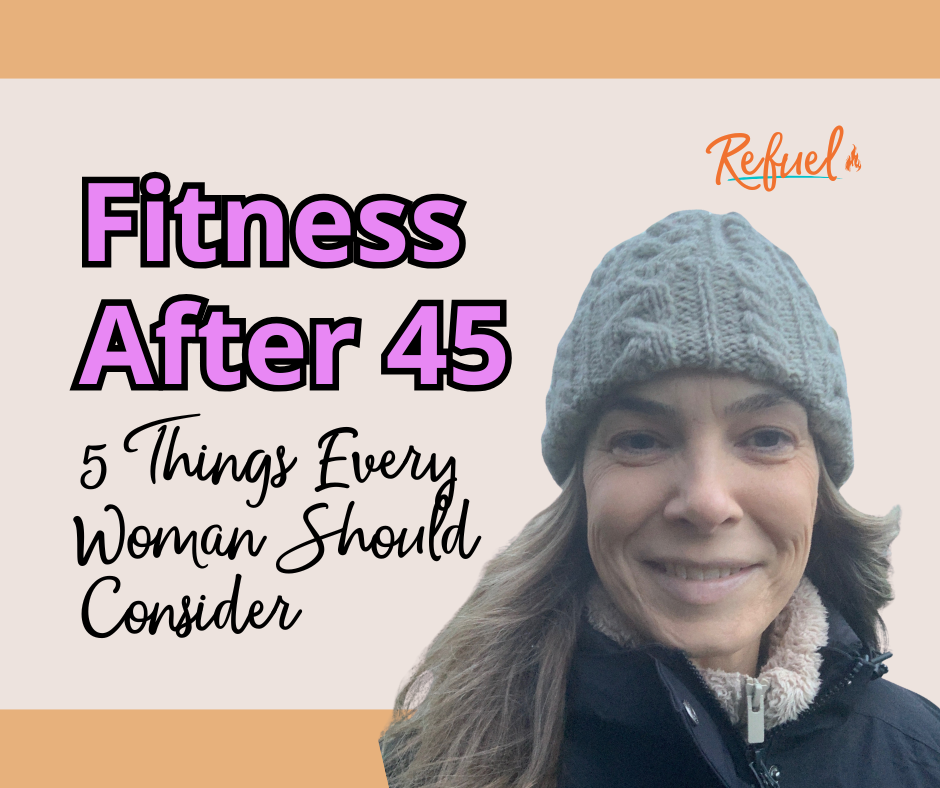
Fitness After 45: Things Every Woman Should Consider
Fitness in your 20s and 30s often revolves around pushing harder, burning more, and squeezing workouts into busy lives. After 45, the body starts asking for something different.
Hormonal changes, shifting energy levels, joint sensitivity, and recovery all influence how exercise feels — and how effective it actually is. This doesn’t mean doing less. It means doing what supports your body now.
Here are five key things to consider when it comes to fitness over 45.
1. Strength Is No Longer Optional
From our mid-40s onwards, women naturally begin to lose muscle mass. This can affect strength, balance, bone health, and metabolism.
The goal of fitness at this stage isn’t shrinking the body, it’s supporting it.
Strength-based movement helps:
Maintain muscle and bone density
Protect joints
Improve posture and balance
Support long-term independence
This doesn’t have to mean heavy lifting in a gym. Pilates, resistance training, and body-weight work all count, especially when done consistently and with good technique.
2. Your Nervous System Matters as Much as Your Muscles
Many women over 45 feel permanently “wired but tired.” Stress tolerance is lower, sleep can be disrupted, and intense workouts may leave you feeling drained rather than energised.
Fitness should support your nervous system not overwhelm it.
Movement that includes:
Controlled pacing
Breath awareness
Focus and precision
this can help calm the body while still building strength. If exercise regularly leaves you exhausted, sore for days, or struggling to sleep, it’s a sign to reassess, not push harder.
3. Recovery Is Part of Training
In midlife, recovery is no longer something that happens automatically. It becomes a skill.
Your body needs:
Adequate rest between sessions
Mobility and stretching
Sleep support
Variety in intensity
Training every day at high intensity often backfires. Progress comes from allowing the body time to adapt, repair, and strengthen. Fitness after 45 is about consistency over intensity.
4. Joint Health and Mobility Deserve Attention
Stiffness, aches, and reduced mobility are common complaints in midlife, but they’re not inevitable.
Exercise that supports joint health should:
Move joints through full, comfortable ranges
Strengthen the muscles around joints
Improve posture and alignment
Avoid repetitive strain
Practices like Pilates, functional strength training, and mobility work help maintain ease of movement and confidence in everyday activities.
5. Fitness Should Add to Your Life, Not Take From It
The best fitness routine is one that fits into your life and leaves you feeling better, not depleted.
Ask yourself:
Do I feel stronger and more capable?
Am I sleeping better or worse?
Does this support my energy levels?
Can I sustain this long term?
Fitness in midlife isn’t about punishment or chasing a past version of yourself. It’s about building a body that supports the life you want to live now and in the years ahead.
The Takeaway
Fitness after 45 is not about doing less — it’s about doing what works.
When strength, nervous system support, recovery, joint health, and sustainability are prioritised, exercise becomes something that enhances wellbeing rather than competes with it.
Move with intention.
Train for longevity.
And choose fitness that supports you, not one that leaves you behind.
📩 Join The Refuel Newsletter
If you’d like tips, support and a weekly Pitstop to refuel, delivered without noise or trends… join The Refuel.
Each week, I share practical tools to help you move well, recover better, and support your body through change.
Tracy Richardson MSc is a movement and wellness specialist with a background in therapy, Pilates, and wellbeing, she combines evidence-based practice with a nurturing, mindful approach. Tracy’s mission is to empower individuals to move with awareness, release tension, and cultivate sustainable health, strength, and inner calm. When she’s not teaching or writing, you’ll often find her walking her dog, practising Pilates, or sipping a calming cup of tea.
