

Why does your heel hurt first thing in the morning?
Why does your heel hurt first thing in the morning?
One of the most common complaints I hear from women over 45 is:
“I can barely put my foot on the floor when I get out of bed.”
“The first few steps are agony, but then it eases off.”
“My heel feels bruised all the time.”
Often, they’re experiencing Plantar Fasciitis.
As a Sports Therapist and Pilates Teacher, this is something I see regularly in active midlife women.
What is Plantar Fasciitis?
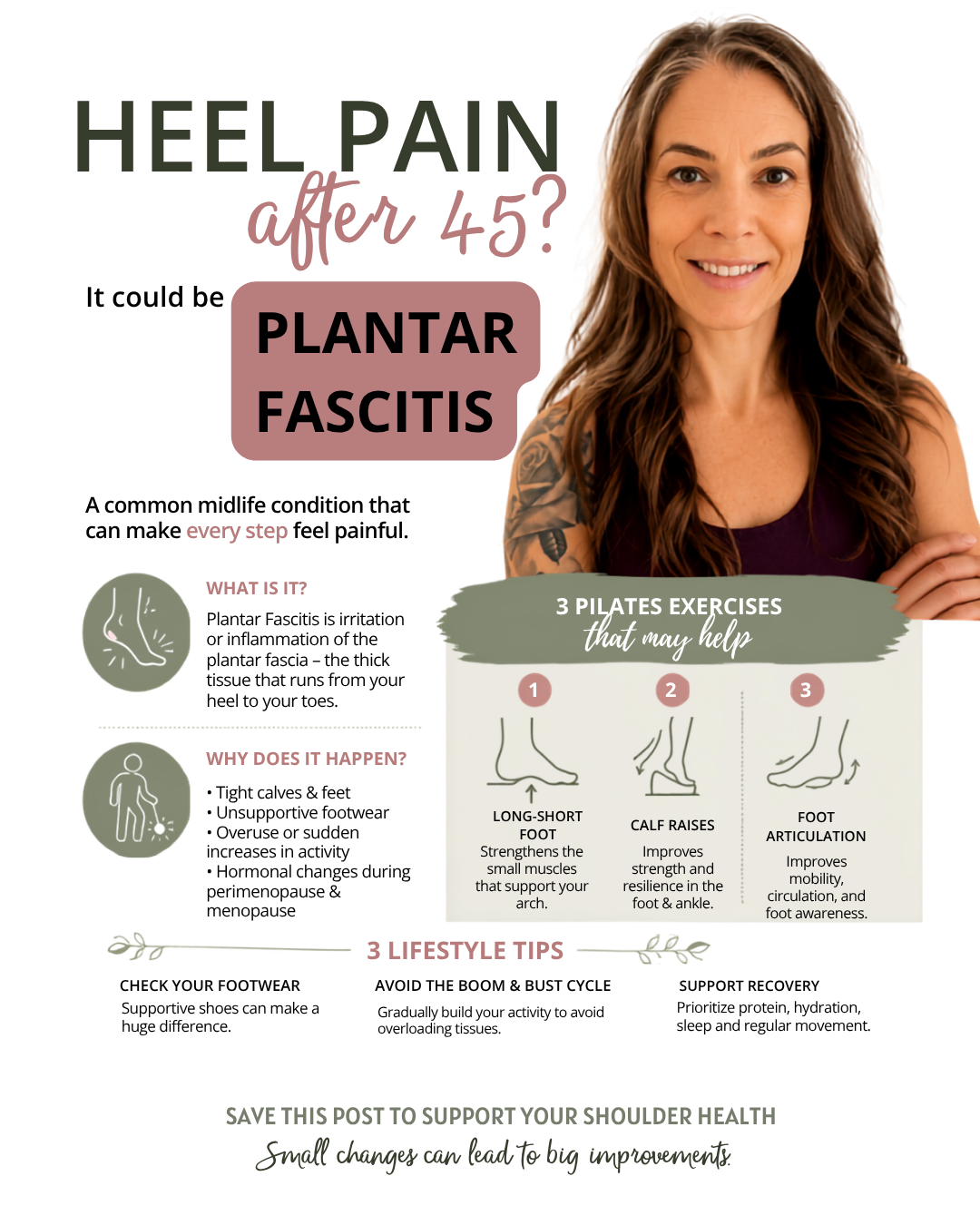
The plantar fascia is a thick band of connective tissue that runs from your heel to your toes.
Its job is to support the arch of your foot and help absorb shock when you walk.
When this tissue becomes irritated, overloaded or inflamed, it can cause pain around the heel and sole of the foot.
Why does it happen?
Plantar Fasciitis is often caused by a combination of factors rather than one single event.
Common contributors include:
Reduced foot and ankle mobility
Tight calves
Long periods of standing
Unsupportive footwear
Sudden increases in walking, running or exercise
Changes in tissue elasticity during perimenopause and menopause
As oestrogen declines, connective tissues can become less resilient, making some women more prone to aches, pains and overuse injuries.
3 Pilates Exercises That May Help
Always work within a comfortable range and seek professional advice if symptoms persist.
Long foot- short foot (Arch Lifts)
Gently lifting the arch without curling the toes can help strengthen the small muscles that support the foot.
Calf Raises
Improves strength and resilience through the foot and ankle complex.
Pilates Foot Articulation
Slowly pointing and flexing the feet improves circulation, mobility and awareness through the ankles and feet.
3 Lifestyle Tips
Check Your Footwear
Supportive shoes can make a huge difference. Those worn-out trainers may be contributing more than you realise.
Avoid the Boom-and-Bust Cycle
Going from very little activity to a long walk or intense exercise session can overload the tissues.
Support Recovery
Prioritise protein, hydration, sleep and regular movement to support tissue repair and recovery.
The Good News…
Plantar Fasciitis can be stubborn, but it often responds well to a combination of targeted exercise, gradual loading and lifestyle changes.
Pilates can help improve foot strength, ankle mobility, balance and overall movement patterns, helping you move with greater comfort and confidence.
Have you ever experienced Plantar Fasciitis?
Tell me below… was your first symptom heel pain first thing in the morning?
About Serendipity Wellness®
Serendipity Wellness provides Pilates classes, wellness coaching, women’s health support, and holistic wellbeing services across Warwickshire. Founded by Tracy Richardson, the business supports women through movement, mindfulness, midlife wellness, and community connection.
Share This post:
📩 Join The Refuel Newsletter
If you’d like tips, support and a weekly Pitstop to refuel, delivered without noise or trends… join The Refuel.
Each week, I share practical tools to help you move well, recover better, and support your body through change.

Tracy Richardson MSc is a movement and wellness specialist with a background in therapy, Pilates, and wellbeing, she combines evidence-based practice with a nurturing, mindful approach. Tracy’s mission is to empower individuals to move with awareness, release tension, and cultivate sustainable health, strength, and inner calm. When she’s not teaching or writing, you’ll often find her walking her dog, practising Pilates, or sipping a calming cup of tea.
