

What If Routine Doesn't Work for You? A Different Way to Think About Consistency
You don't need to do the same thing every day to build healthy habits. You just need to find a way to keep coming back.
We're constantly told that consistency is the secret to success.
Create a routine. Stick to a schedule. Get up at the same time. Exercise on the same days. Build habits. Repeat them until they become second nature.
And, to be fair, routines can be brilliant. They take away some of the decision-making, help us create structure and make it easier to follow through on the things that matter.
But what if you're someone who doesn't thrive on routine?
What if some days you wake up feeling full of energy, ready to tackle your to-do list, get your movement in and generally take on the world?
And other days, getting dressed feels like a significant achievement, your energy is nowhere to be found, and the thought of following your carefully planned routine makes you want to climb back into bed?
What if you're juggling work, family, caring responsibilities, a body that seems to have developed a mind of its own, and all the other things that come with midlife?
Does that mean you're inconsistent?
Or have we simply become too rigid in our definition of what consistency actually means?
The problem with all-or-nothing wellness
I think many of us have been conditioned to believe that if we can't do something properly, there's very little point in doing it at all.
If we can't manage a full workout, we skip it.
If we miss Monday, we decide we'll start again next week.
If our healthy eating goes off track, we tell ourselves we've ruined the whole thing.
And if we can't stick to the routine we've created, we assume we lack discipline.
Sound familiar?
The problem is that life rarely follows a neat, predictable schedule. And as we move through midlife, our energy, sleep, stress levels, responsibilities and physical needs can change considerably.
Some days we have more capacity than others. Sometimes we feel strong and motivated. Sometimes we need to slow down.
That doesn't mean we've failed.
It means we're human.
The answer isn't necessarily to become better at forcing ourselves through a rigid routine. Perhaps it's to create a more flexible approach that allows us to keep going without expecting ourselves to be exactly the same every day.
Consistency doesn't have to mean sameness
Here's the distinction I'd love you to consider.
Consistency is about maintaining the connection with a habit. It doesn't mean the habit has to look identical every time.
Think about movement.
On a high-energy day, you might feel like attending your usual Pilates class, working on your strength, challenging your balance and enjoying the feeling of moving your body.
On a lower-energy day, perhaps a shorter Pilates session, some gentle mobility or a few minutes of mindful movement feels more appropriate.
Both can have a place in a sustainable movement practice.
Of course, some days the right choice is complete rest, particularly when you're unwell or recovering. Consistency isn't about pushing through every signal your body gives you. It's about learning to respond to those signals rather than ignoring them.
The aim isn't to achieve the maximum possible output every day.
It's to build a relationship with movement that you can return to, again and again, over the months and years ahead.
And that requires flexibility.
Try thinking in terms of capacity, not failure
Instead of asking yourself, "Can I manage my usual routine today?", try asking:
"What do I have the capacity for today?"
It's a small change in language, but it can completely alter how you approach your wellbeing.
You could even think of your movement options in three ways.
On high-energy days: Enjoy your usual class, work on building strength, or take advantage of the fact that you feel good. You don't have to hold yourself back simply because tomorrow might look different.
On average-energy days: Keep things manageable. Attend your regular Pilates class, follow a familiar movement sequence or fit in a shorter session.
On low-energy days: Reduce the demands. Try gentle mobility, a few minutes of breathing and movement, or a short, accessible session. And if your body needs rest, let rest be the plan.
These aren't fixed categories, and you don't need to label every day. They're simply a reminder that you have options.
The key is to stop treating every day as a test of willpower.
You can adapt the activity without abandoning the bigger intention.
And if you miss a few days? You haven't lost everything you've built. You can simply begin again.
Why I love Pilates as part of this approach
One of the things I love about Pilates is its adaptability.
Movement doesn't have to be extreme to be worthwhile. You can work on strength, mobility, balance, coordination and body awareness while adjusting the exercises to suit your needs and abilities.
Some sessions might feel challenging. Others might be slower and more focused on control, breathing and how your body feels.
As a Pilates teacher, I don't believe every session needs to leave you exhausted to have been worthwhile.
Especially in midlife, I want women to feel that movement is something they can build into their lives, not another demand they're constantly struggling to meet.
We want to develop strength for the things we enjoy now and the things we want to keep doing as we get older. We want to feel more confident in our bodies and maintain the physical capacity to live life on our own terms.
That means thinking beyond the next workout.
It means building a sustainable relationship with movement.
And sometimes, that means doing less today so that movement remains something you want to return to tomorrow.
This is why I created the Pilates Pyjama Club
The Pilates Pyjama Club (PPJ Club) is built around making movement more accessible and easier to fit into real life.
Because not everyone wants to get in the car, travel to a class, change into workout clothes and commit to a full session every time they want to move.
Sometimes you want the convenience of moving at home, in your own space, on your own terms.
An online Pilates practice can offer that flexibility. You can find a time that works for you, choose a session that feels appropriate and make movement part of your life without needing every day to look the same.
And yes, sometimes that might mean doing Pilates in your pyjamas.
Because if the choice is between waiting for the perfect conditions and finding a realistic way to move, I'd much rather you had an option that worked for you.
The aim isn't to turn your home into another place where you feel pressured to perform.
It's to make movement easier to access.
The best routine isn't necessarily the most impressive one. It's the one you can return to.
Somalates®: learning to listen, not just push
This idea also sits at the heart of my work with Somalates®.
Somalates® brings together Pilates precision, somatic movement and breathwork to encourage greater body awareness and a more mindful relationship with movement.
Its purpose is reconnection.
Rather than approaching every session with the expectation that we need to correct, achieve or push ourselves harder, we can begin by noticing what's happening in our bodies.
How do I feel today?
Where am I holding tension?
What feels comfortable?
What might I need more of, or less of?
This isn't about using how we feel as a reason never to challenge ourselves. Strength, progress and challenge all have their place.
It's about developing the awareness to recognise when to challenge, when to adapt and when to pause.
Because you can't build a sustainable relationship with your body if you're constantly treating it as something to overcome.
Sometimes the most valuable thing you can practise is listening.
You don't need a perfect streak
Social media is full of challenges, streaks and routines that promise to transform your life if you just follow them consistently enough.
And challenges can be motivating. Having a plan and a little accountability can make it easier to get started.
But I don't want you to believe that missing a day means you've undone your progress.
One missed workout doesn't erase the benefits of the sessions you've already completed.
One difficult week doesn't mean you're back at square one.
And a change in your circumstances doesn't mean you have to abandon your intentions.
You can have a week when you attend three classes and another when you manage one. You can have periods when you're progressing with your strength and others when maintaining what you have is a perfectly reasonable goal.
The important thing is to keep finding your way back when you're ready.
Not with guilt.
Not with punishment.
And certainly not by deciding you have to make up for every session you missed.
Just by beginning again.
So, what does consistency look like for you?
Perhaps it's attending your weekly Pilates class.
Perhaps it's having an online session ready for the days when leaving the house feels like too much effort.
Perhaps it's choosing a shorter session rather than skipping movement altogether.
Perhaps it's recognising that today is a day for rest, and returning to your usual activities when your energy allows.
Or perhaps it's finally letting go of the idea that you need to become a different, more disciplined person before you can look after yourself.
You don't.
You need an approach that works with your life, not one that makes you feel as though you're constantly falling short.
Because wellness isn't something you either get right or get wrong.
It's something you keep coming back to, in all the different seasons of your life.
And if there's one thing I'd love more women to understand, especially as we move through midlife, it's this:
You don't have to do the same thing every day to be consistent. You just need to find a way to keep caring for yourself that you can sustain.
Some days that might look like a full Pilates session.
Some days it might be ten minutes of gentle movement.
Some days it might be rest.
Let it be enough to meet yourself where you are today.
Then, when tomorrow comes, you can decide again.
Ready to find a way of moving that works for you?
If you'd like to build a more sustainable movement practice, I'd love you to explore what I offer at Serendipity Wellness®.
Pilates classes: Move with me in person, build strength, improve mobility and balance, and enjoy being part of a supportive community.
The Pilates Pyjama Club: Your at-home Pilates option for those days when you want to move in your own space, at a time that suits you.
Somalates®: Explore a more mindful approach to movement, reconnect with your body and discover the value of moving with awareness.
You don't need to be fitter, more flexible or more disciplined before you begin.
You just need to find your starting point.
Tracy Richardson MSc
Founder of Serendipity Wellness® and creator of Somalates®
Helping you move, feel and live well — one day at a time.
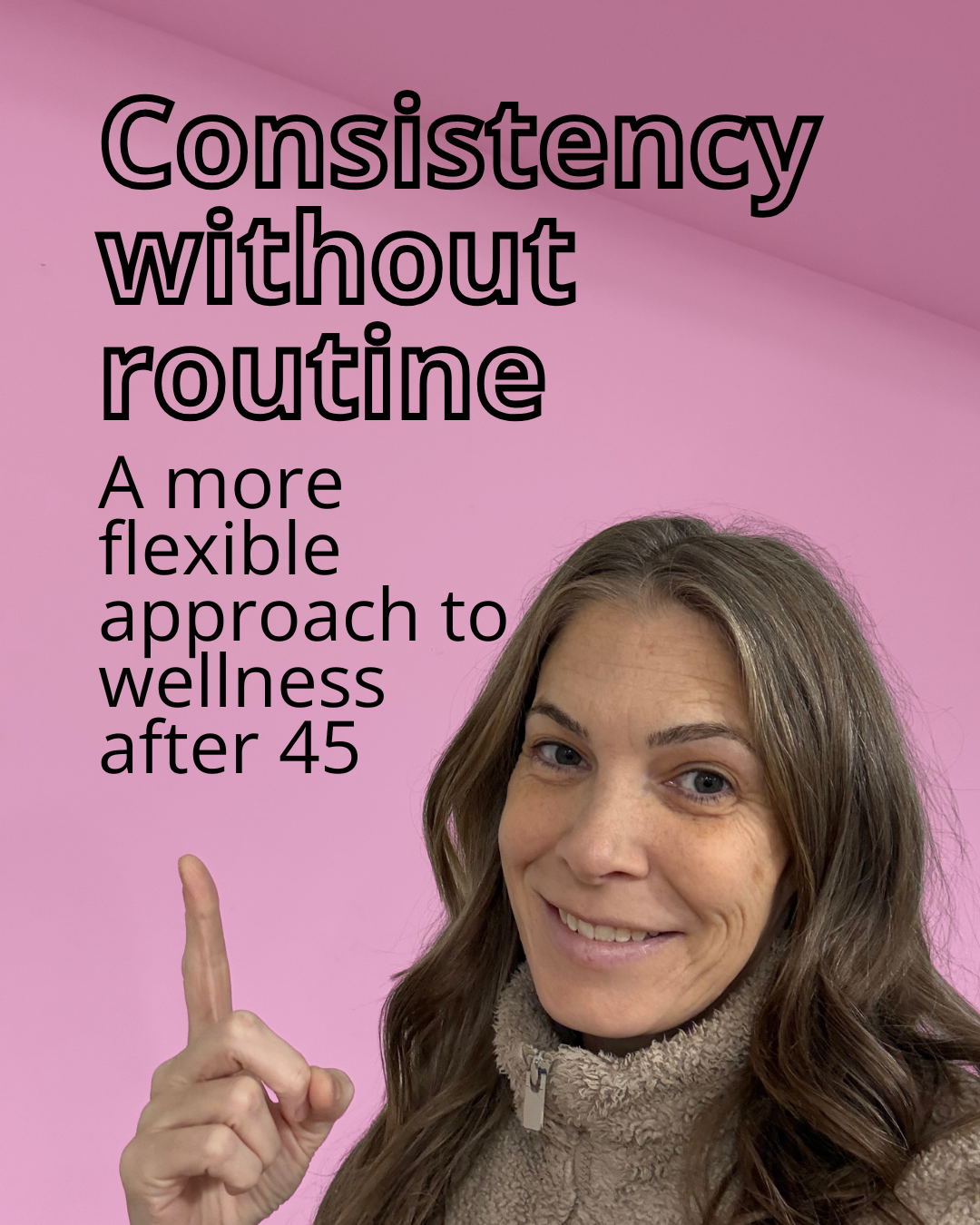
Ready for more Pilates?
If you're a woman 45+ looking to become stronger, more mobile and more confident in your body, I'd love you to join me here at Serendipity Wellness®.
I offer Pilates classes, workshops, online movement and wellness experiences designed to help you move, feel and live well without the pressure to push yourself to exhaustion.
Your Pilates journey doesn't have to start with a complicated workout.
Sometimes, it starts with simply lying down, taking a breath and noticing your body.
Start there. 🤍
Come and join us in class here
About Serendipity Wellness®
Serendipity Wellness provides Pilates classes, wellness coaching, women’s health support, and holistic wellbeing services across Warwickshire. Founded by Tracy Richardson, the business supports women through movement, mindfulness, midlife wellness, and community connection.
Share This post:
📩 Join The Refuel Newsletter
If you’d like tips, support and a weekly Pitstop to refuel, delivered without noise or trends… join The Refuel.
Each week, I share practical tools to help you move well, recover better, and support your body through change.
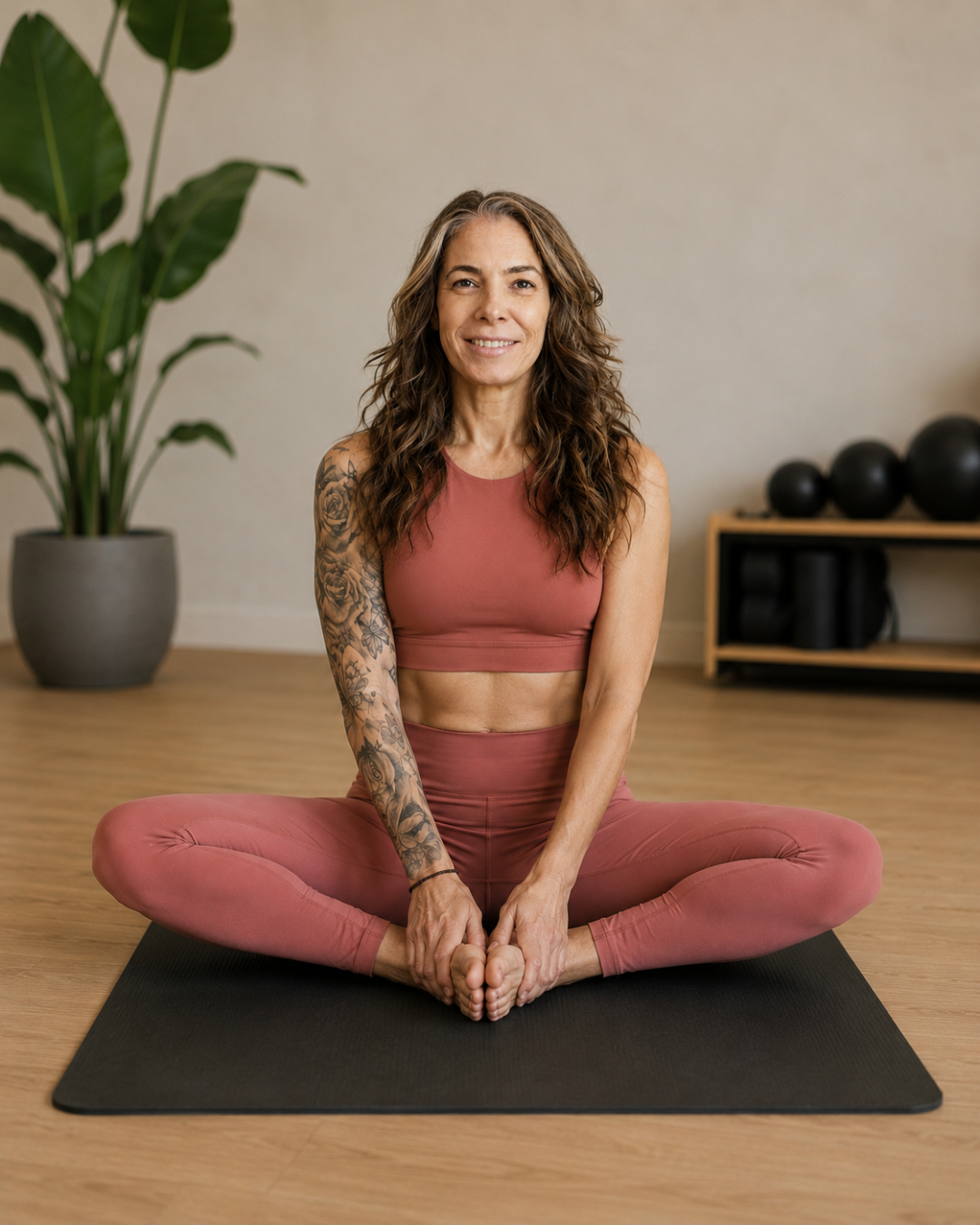
Tracy Richardson MSc is a movement and wellness specialist with a background in therapy, Pilates, and wellbeing, she combines evidence-based practice with a nurturing, mindful approach. Tracy’s mission is to empower individuals to move with awareness, release tension, and cultivate sustainable health, strength, and inner calm. When she’s not teaching or writing, you’ll often find her walking her dog, practising Pilates, or sipping a calming cup of tea.
