The Midlife Muscle Edit: Why Your Muscles Might Be One of Your Most Important Investments
Muscle. It’s not just about looking toned. It could be one of the most valuable investments you make in your health, independence and future self.
For years, women have been sold the idea that exercise is primarily about burning calories, shrinking our bodies and “getting toned”.
But somewhere along the way, I think we missed the bigger picture.
As we move through our 40s, 50s, 60s and beyond, our muscles become less about aesthetics and much more about capacity.
Can I carry my shopping?
Can I lift my suitcase?
Can I get up from the floor?
Can I climb the stairs without feeling completely wiped out?
Can I enjoy a walking holiday, play with my grandchildren, garden, dance, travel and live my life without constantly worrying about whether my body is capable of keeping up?
That, to me, is the real conversation around muscle.
Muscle is much more than what you see in the mirror
Your muscles aren't simply there to give you definition.
They help you move, maintain posture, stabilise your joints and generate force. They also play an important role in how your body handles everyday physical demands.
And here's the bit I really want women in midlife to understand:
Muscle is something we can actively influence.
Ageing doesn't automatically mean becoming weak, frail or incapable.
The British Dietetic Association notes that muscle mass and strength gradually decline with age, with muscle loss beginning from around 40. But it also emphasises the importance of resistance exercise, good nutrition and hydration in maintaining muscle health.
In other words, we have some influence over the trajectory.
And that's incredibly empowering.
Why does muscle matter so much in midlife?
Midlife is a fascinating point in the journey.
We're not suddenly “old”.
But we're also not 25 anymore.
Hormonal changes, particularly around perimenopause and menopause, occur alongside the normal ageing process. At the same time, many women become less active, spend more time sitting, have more responsibilities and simply don't recover from exercise in quite the same way they once did.
This is where I think we need to change the conversation.
Instead of asking:
“How can I lose this weight?”
I'd love us to start asking:
“How can I make my body more capable?”
Because strength gives us options.
Your muscles are your physical reserve
I love thinking about muscle as a kind of physical savings account.
You don't build savings because you need the money today.
You build them because you know life is unpredictable.
Muscle can work in a similar way.
We build and maintain strength while we can because we don't know what the next decade will bring.
An illness.
An injury.
A period of inactivity.
A stressful few months.
A surgery.
Or simply the natural changes that come with ageing.
Having more physical capacity gives you something to draw upon.
The goal isn't to become a bodybuilder.
It's to have enough strength and physical reserve that everyday life remains enjoyable.
And this is where protein comes in
We can't talk about muscle without talking about protein.
Protein is essentially the raw material your body uses to build and repair tissues, including muscle. It is broken down into amino acids, which your body uses for a whole range of functions.
But here's where I want to be really clear.
This isn't a “protein fixes everything” article.
There is no perfect diet.
There is no magical protein target that every woman needs to hit.
And you don't need to live on protein shakes and chicken breasts.
Your nutritional needs are individual and depend on things such as your body size, age, activity levels and health.
What I do think is useful in midlife is becoming more aware of where your protein is coming from.
Because many women start the day with very little protein.
Perhaps it's toast.
A piece of fruit.
A bowl of cereal.
Then a light lunch.
And suddenly it's dinner before we've eaten much protein at all.
The British Heart Foundation suggests that spreading protein across meals can help support how the body uses it, and gives simple examples of protein-containing foods including eggs, yoghurt, fish, meat, tofu, beans and lentils.
So rather than obsessing over numbers, try asking:
“Where's my protein in this meal?”
That's a much more useful question.
What about the famous “30g of protein”?
You may have seen the recommendation to aim for around 30g of protein per meal.
I actually like this as a visual prompt rather than a rule.
Think of it as a nudge to make your protein source substantial enough to matter.
For example, the British Heart Foundation lists approximately 30g of protein in 100g of meat, fish or poultry, around 15g in 150g of 0% Greek yoghurt and around 7g in one egg.
But your meal doesn't need to contain exactly 30g.
And you certainly don't need to start weighing every mouthful.
Awareness, not obsession.
That's the difference.
The muscle equation is bigger than protein
This is something I really want women to understand.
Eating protein on its own isn't going to magically build muscle.
Your muscles need a reason to adapt.
That's where resistance exercise comes in.
When you challenge a muscle — through weights, resistance bands, bodyweight exercises, machines or other forms of resistance — you're giving your body a signal:
“We still need this.”
And your body responds by adapting.
This is why I love combining Pilates with strength work.
Pilates can help us develop control, stability, mobility, coordination and muscular endurance.
Add appropriate resistance and progressive loading, and we can give those muscles another reason to become stronger.
Research in postmenopausal women supports the value of resistance training for physical fitness and strength. A 2024 systematic review and meta-analysis found significant improvements in upper- and lower-body strength and aerobic capacity compared with control groups.
It's not about smashing yourself.
It's about giving your body an appropriate challenge and then allowing it to adapt.
Strength doesn't have to look like a gym
This is important.
Strength training doesn't necessarily mean walking into a huge gym and lifting enormous weights.
It could be:
Dumbbells
Resistance bands
Pilates equipment
Bodyweight exercises
Squats
Lunges
Pushes and pulls
Carrying shopping
Getting up and down from the floor
Climbing stairs
Lifting and carrying things safely
The principle is simply:
Make your muscles work against resistance.
And gradually, where appropriate, give them a little more to do.
What about Pilates?
This is where my own philosophy comes in.
I don't believe women need to choose between Pilates and strength.
We need both movement quality and strength.
Pilates can be a wonderful way to develop body awareness, control, balance, stability, mobility and muscular endurance.
But if your goal is to deliberately build or preserve muscle as you age, we also need to think about progressive resistance.
That might mean increasing resistance, load, repetitions, complexity or challenge over time.
Not every Pilates class needs to become a weightlifting session.
But I do think the days of telling women that tiny movements with tiny weights are the only answer are behind us.
We are capable of more.
And then there's recovery
There's another piece of the puzzle that is often forgotten.
You don't build strength while you're exercising.
Exercise provides the stimulus.
Your body then needs nutrition, rest and recovery to adapt.
This is particularly important in midlife because more isn't necessarily better.
I don't want women doing endless workouts because they believe they need to “earn” their food.
I want us to think about stimulus + nourishment + recovery.
Move it.
Feed it.
Recover it.
Repeat.
Ten simple meals that can help you think about protein
Rather than giving you another restrictive meal plan, here's something much more useful:
Ideas.
Depending on portions and brands, meals containing foods such as chicken, fish, eggs, Greek yoghurt, cottage cheese, tofu, lentils, beans and edamame can contribute substantial amounts of protein.
For example:
Chicken + new potatoes + greens
Salmon + potatoes + vegetables
Steak + salad + potatoes
Eggs + Greek yoghurt + berries
Tuna jacket potato + salad
Prawn + egg salad + wholegrain bread
Cottage cheese + tomatoes + wholegrain toast
Tofu + edamame + vegetable rice bowl
Lentils + feta + roasted vegetables
Greek yoghurt or Skyr + berries + seeds
The point isn't to eat these every day.
The point is to start noticing how easy — or difficult — it is for you to include a meaningful protein source in your meals.
And remember: plant proteins absolutely count. Beans, lentils, tofu, tempeh, edamame, nuts, seeds and wholegrains can all contribute. Eating a variety of plant protein sources across the day can provide the amino acids your body needs.
So how do we “leverage” muscle to our advantage?
This is the question I really want you to take away.
Don't wait until you're older to start thinking about muscle.
Build your reserve now.
Think of it as investing in your future self.
Start with resistance
Give your muscles a reason to stay strong.
You don't need to destroy yourself.
You need consistency and appropriate progression.
Become protein-aware
Not protein-obsessed.
Simply start looking at your meals and asking:
“What's my protein source here?”
Stop fearing strength
Strength doesn't automatically mean bulky.
It means capable.
Eat enough
Your body needs energy as well as protein.
Carbohydrates, fats, fibre, vitamins, minerals and fluids all have a place in a nourishing diet.
Prioritise recovery
Your body isn't a machine.
Rest is part of the training.
Think about your future self
Ask yourself:
“What do I want my body to be able to do at 60? 70? 80?”
Then start building towards that woman now.
Your future self needs your muscles
This is the bit I really want to leave you with.
I don't want women lifting weights because they're frightened of getting older.
I don't want you exercising because you hate your body.
And I certainly don't want you eating protein because you've been told you need to shrink.
I want us to think differently.
We build muscle because we want to remain capable.
We build strength because we want to remain independent.
We nourish ourselves because we want to support our bodies today — and the bodies we're going to inhabit decades from now.
Because longevity isn't simply about adding years to your life.
It's about having the health, strength and capacity to enjoy those years.
And perhaps that's the real gift of muscle.
Not looking younger.
Not being smaller.
Not chasing some mythical “perfect” body.
Being strong enough to keep living the life you love.
Move it. Feed it. Recover it.
And please remember:
There is no perfect diet.
There is no perfect body.
There is no perfect workout.
There is simply the opportunity to make slightly more supportive choices, more often.
And that's enough.
Your future self is going to thank you for it.
— Tracy Richardson MSc
Serendipity Wellness®
Helping women 45+ build strength, energy, confidence and wellbeing for the years ahead.
A final note on protein
Protein requirements are individual. The amounts discussed here are practical examples rather than personalised prescriptions. People with kidney disease or other medical conditions affecting protein intake should seek individual advice from their GP or registered dietitian. The British Dietetic Association similarly recommends seeking professional dietary advice where individual nutritional needs require assessment.
THE MIDLIFE MUSCLE EDIT
Strong now. Capable later.
Why muscle, protein and strength might be some of the most important investments you make in midlife.
Read Tracy's practical guide to building a stronger, healthier body for the years ahead.
↓ Read the magazine
About Serendipity Wellness®
Serendipity Wellness provides Pilates classes, wellness coaching, women’s health support, and holistic wellbeing services across Warwickshire. Founded by Tracy Richardson, the business supports women through movement, mindfulness, midlife wellness, and community connection.
Share This post:
📩 Join The Refuel Newsletter
If you’d like tips, support and a weekly Pitstop to refuel, delivered without noise or trends… join The Refuel.
Each week, I share practical tools to help you move well, recover better, and support your body through change.
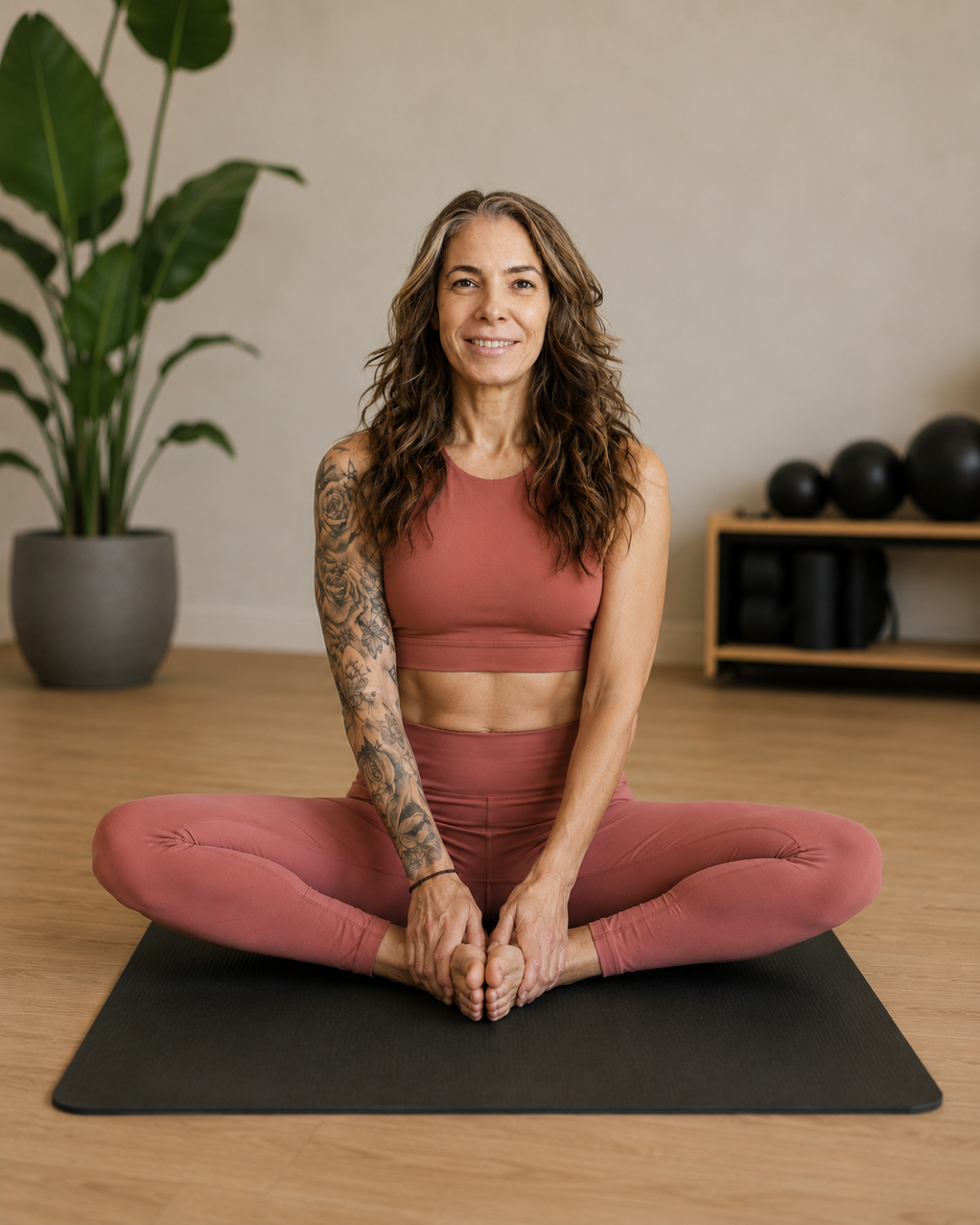
Tracy Richardson MSc is a movement and wellness specialist with a background in therapy, Pilates, and wellbeing, she combines evidence-based practice with a nurturing, mindful approach. Tracy’s mission is to empower individuals to move with awareness, release tension, and cultivate sustainable health, strength, and inner calm. When she’s not teaching or writing, you’ll often find her walking her dog, practising Pilates, or sipping a calming cup of tea.
