Why Low Impact Is the Future for Women 40+
Think Pilates. Walking. Weights. Reformer. Barre. Sculpt. Seated movement. Strength without the punishment.
For years, we’ve been sold the idea that a “good” workout is one that leaves us exhausted.
Sweat more. Push harder. Jump higher. Burn more calories.
And for many women, that approach worked — for a while.
But somewhere around our 40s, our relationship with exercise can start to change.
Not because we’re incapable.
Not because we need to “take it easy.”
But because our bodies are changing — and the way we train them needs to evolve too.
I believe low-impact movement is the future for women 40+.
And perhaps more importantly, I believe it’s time we stopped confusing low impact with low intensity.
Low impact doesn't mean low effort
Low-impact exercise simply means reducing the amount of force and repeated impact placed through your joints.
It doesn't mean sitting down and doing nothing.
It doesn't mean an easy workout.
And it certainly doesn't mean you can't get stronger, fitter or more toned.
You can work incredibly hard without jumping, pounding or constantly pushing your body to its limits.
Think:
Pilates.
Reformer.
Walking.
Barre.
Sculpting.
Resistance training.
Light weights.
Bands.
Seated and standing strength work.
Mindful mobility.
These forms of movement can challenge your muscles, improve balance, build strength, support mobility and leave you feeling better, rather than completely depleted.
And that distinction becomes increasingly important as we move through midlife.
Your body needs strength, not punishment
One of the biggest misconceptions about low-impact exercise is that it's somehow inferior to high-impact workouts.
It isn't.
Your muscles don't know whether you're jumping around a gym or performing a slow, controlled squat with a weight.
They respond to load, resistance, time under tension and progressive challenge.
That's why Pilates and sculpting can be so effective.
A small movement doesn't necessarily mean a small challenge.
Sometimes the tiniest movement, performed slowly and with control, can make your muscles work incredibly hard.
And that's exactly what many women need in midlife.
More strength. More stability. More mobility. More resilience.
Not necessarily more punishment.
Walking is having a moment and rightly so
Walking might be one of the most underrated forms of exercise.
It's accessible.
It's free.
You can do it alone or with friends.
You can walk outside, on a treadmill, around your neighbourhood or as part of your everyday life.
And importantly, it gets you moving without requiring your body to absorb huge amounts of impact.
But don't underestimate it.
A brisk walk can be surprisingly challenging, especially when you introduce hills, changes of pace or longer distances.
And there's something else I love about walking.
It gets us out of the mindset that exercise has to be a formal workout.
Movement can simply be part of your life.
Pilates isn't just stretching
Pilates has exploded in popularity and I'm not surprised.
For women 40+, it ticks so many boxes.
It can help develop:
Core strength
Postural awareness
Balance
Mobility
Coordination
Stability
Muscular endurance
Body awareness
And because Pilates can be adapted, it can meet you where you are.
You can work on a mat.
You can use a reformer.
You can add resistance bands or light weights.
You can work standing.
You can work seated.
You can make it more challenging.
You can make it more accessible.
That's the beauty of it.
And then there's strength training...
Here's where I think the future of low-impact fitness gets really interesting.
Because women in midlife absolutely need strength training.
We want to support muscle mass, strength, balance and bone health as we age.
But strength training doesn't have to mean lifting enormous weights or throwing yourself through a high-intensity circuit.
A pair of light-to-moderate weights can be enough to create a challenge.
Add slow, controlled movement.
Increase repetitions.
Change the tempo.
Use resistance bands.
Combine strength with Pilates.
Add a little sculpting.
Suddenly, you're creating a workout that is low impact but seriously effective.
Barre, sculpt and reformer: the new fitness playground
This is why I think we're going to see even more women moving towards formats such as barre, Pilates sculpt and reformer.
They're challenging without necessarily being punishing.
They're social.
They're adaptable.
They're focused on quality of movement.
And they can give you that wonderful feeling of “I've worked my body” without the feeling of “I've destroyed myself.”
And honestly?
I think that's a much more sustainable relationship with exercise.
What about high-impact exercise?
This isn't an argument against running, jumping, HIIT or other high-impact activities.
If you love them, your body tolerates them and they work well for you, brilliant.
But they don't have to be the default.
And they certainly don't have to be the measure of whether you've had a “proper” workout.
For some women, particularly during periods of hormonal change, stress, poor sleep or simply when recovery isn't what it used to be, constantly pushing the intensity can leave you feeling more depleted than energised.
Sometimes less impact and more intention is exactly what your body needs.
The future isn't about doing less
This is the bit I really want women to hear.
Low impact doesn't mean lowering your expectations of your body.
It means becoming smarter about how you train it.
It's about understanding that fitness isn't just about burning calories.
It's about being strong enough to carry your shopping.
Getting up and down from the floor with confidence.
Walking for miles on holiday.
Playing with your grandchildren.
Feeling comfortable in your body.
Having the strength and mobility to do the things you love.
And still having enough energy left afterwards to actually enjoy your life.
That's fitness too.
Maybe midlife exercise needs a new definition
Perhaps the future isn't about asking:
“How hard can I push myself?”
Perhaps it's about asking:
“How can I make my body stronger, more mobile and more resilient, while still feeling good?”
That's a very different question.
And I think it's one worth asking.
Because your 40s, 50s, 60s and beyond aren't the end of your fitness story.
They can be the beginning of a completely different relationship with movement.
One built around strength, longevity, energy, mobility and enjoyment.
So yes, I'm calling it: Low impact is the future.
Not because women 40+ need less.
But because we deserve better.
Better movement.
Better recovery.
Better strength.
Better longevity.
And workouts that support the woman we are becoming — rather than trying to turn us back into the woman we were at 25.
Move well. Get strong. Stay mobile. And make movement something your body looks forward to.
Ready to move differently?
If you're a woman 40+ looking for movement that challenges you without leaving you feeling battered and broken, my classes combine Pilates, strength, mobility, sculpting and mindful movement in a supportive environment.
Because getting stronger doesn't have to mean going harder.
It can mean moving smarter. ↓ Read the magazine
Strong now. Capable later.
Why muscle, protein and strength might be some of the most important investments you make in midlife.
Read Tracy's practical guide to building a stronger, healthier body for the years ahead.

Ready to put this into practice?
Come and join us in class here
About Serendipity Wellness®
Serendipity Wellness provides Pilates classes, wellness coaching, women’s health support, and holistic wellbeing services across Warwickshire. Founded by Tracy Richardson, the business supports women through movement, mindfulness, midlife wellness, and community connection.
Share This post:
📩 Join The Refuel Newsletter
If you’d like tips, support and a weekly Pitstop to refuel, delivered without noise or trends… join The Refuel.
Each week, I share practical tools to help you move well, recover better, and support your body through change.
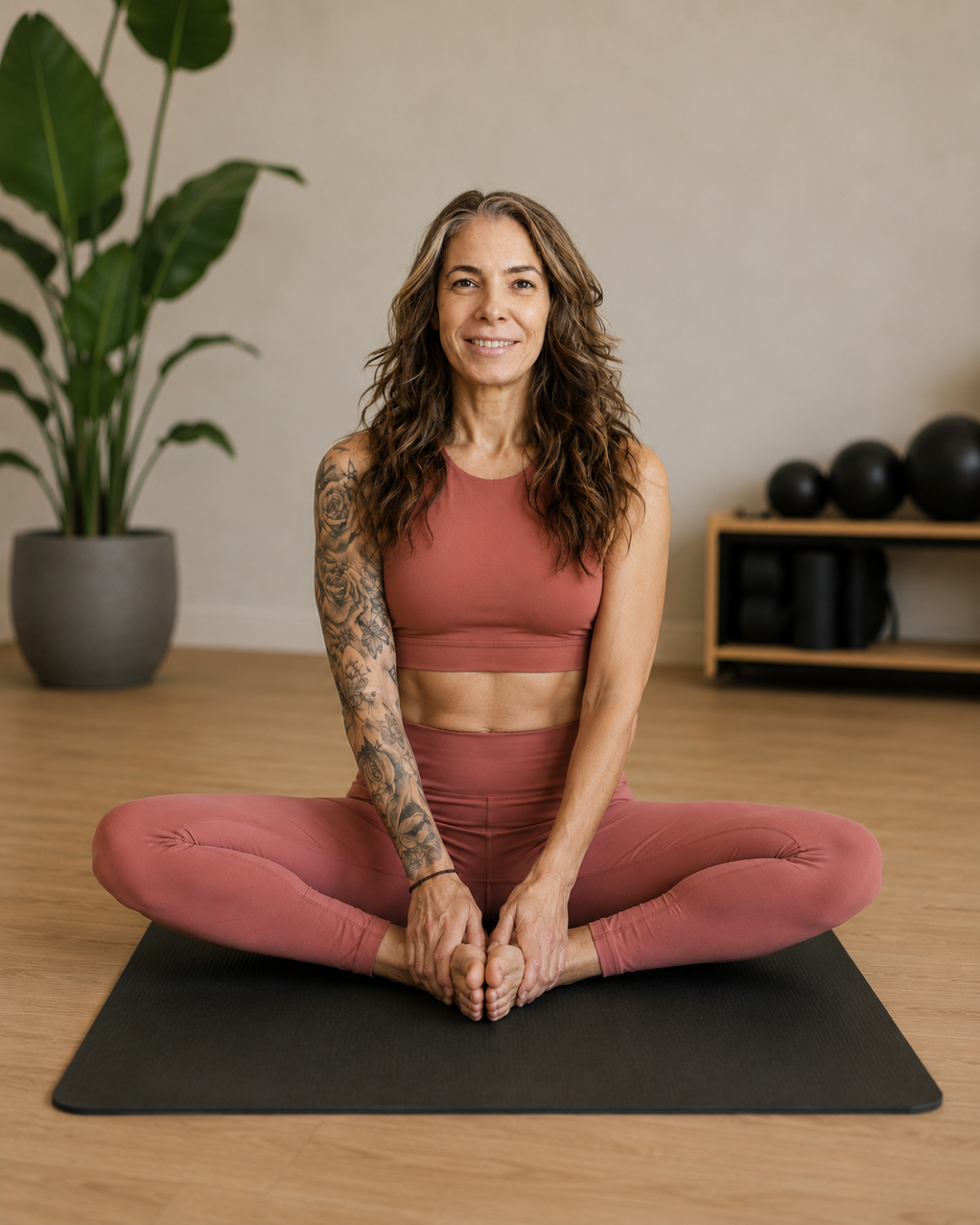
Tracy Richardson MSc is a movement and wellness specialist with a background in therapy, Pilates, and wellbeing, she combines evidence-based practice with a nurturing, mindful approach. Tracy’s mission is to empower individuals to move with awareness, release tension, and cultivate sustainable health, strength, and inner calm. When she’s not teaching or writing, you’ll often find her walking her dog, practising Pilates, or sipping a calming cup of tea.
