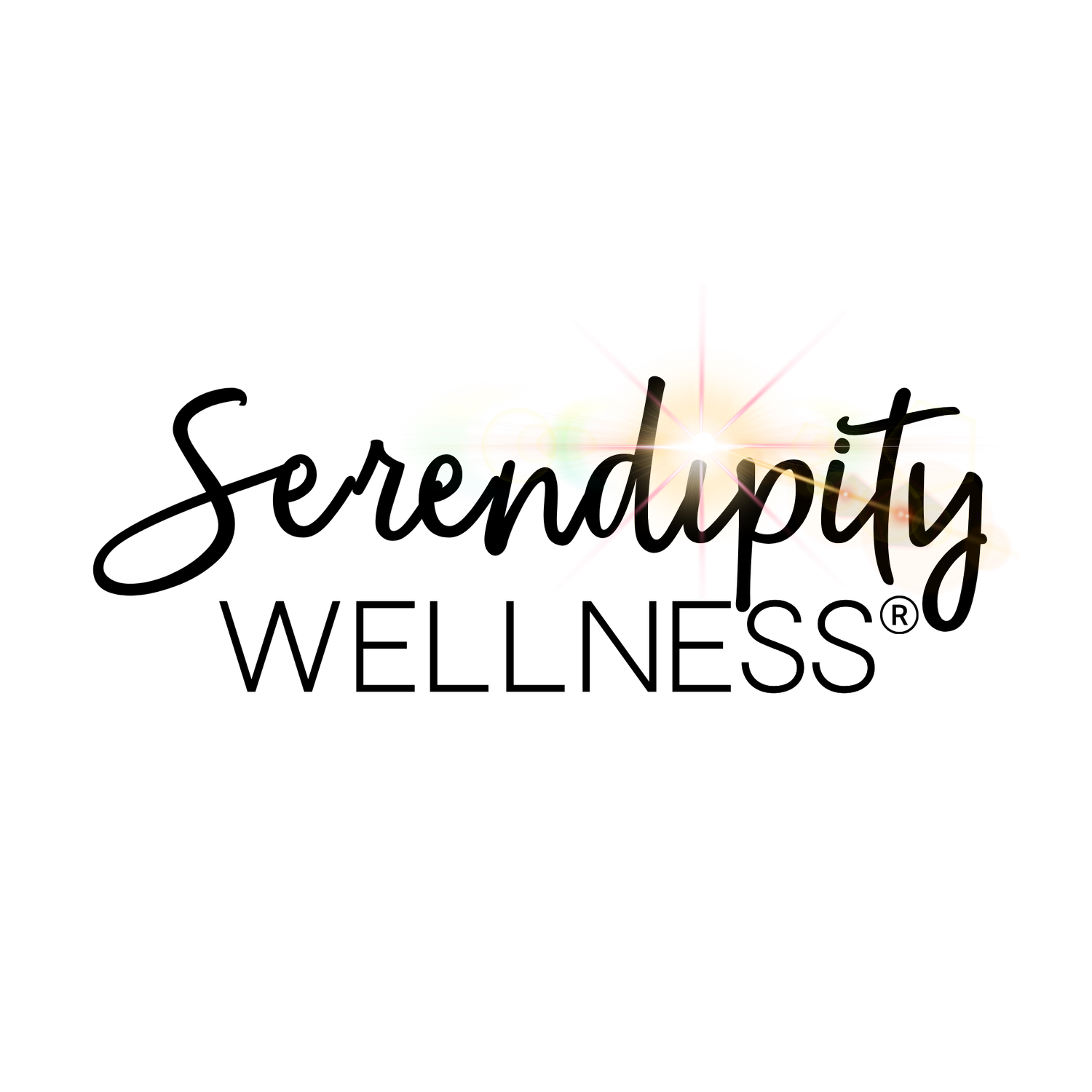
Muscle Is Your Midlife Superpower
Why building strength after 45 could be one of the smartest things you do for your future self
There is a conversation about women's health that I think we desperately need to change.
It isn't about losing weight.
It isn't about getting smaller.
And it certainly isn't about trying to look 25 again.
It is about muscle.
And one of the people who has really shifted the way I think about this is Dr Gabrielle Lyon, whose work around what she calls muscle-centric medicine puts skeletal muscle right at the centre of healthy ageing.
Her message is simple but incredibly powerful: Muscle isn't just something that makes you look strong. It helps make you strong, resilient, metabolically healthy and capable.
And as women move through their 40s, 50s and beyond, that matters more than ever.
We need to stop thinking about muscle as something cosmetic
For years, women's fitness has been dominated by phrases like:
“Tone up.”
“Burn calories.”
“Lose weight.”
“Get smaller.”
But what if we turned the conversation around?
What if instead of asking: “How much do I weigh?”
we started asking: “What can my body do?”
Can I carry my shopping?
Can I get up from the floor easily?
Can I climb the stairs without struggling?
Can I lift my suitcase?
Can I get up from a chair without using my hands?
Can I catch myself if I trip?
Can I continue doing the things I love at 60, 70 and 80?
That is where muscle becomes much more interesting.
Because muscle is functional insurance for the future. And the earlier we invest in it, the more options we give our future selves.
The midlife muscle shift
We naturally lose muscle as we age. But ageing isn't the only issue.
How much we move, how much resistance we place on our muscles, how much protein we eat and how well we recover all influence what happens to our muscle over time.
And for women, the menopausal transition adds another layer.
Research is still evolving, but changes in female sex hormones appear to influence muscle protein turnover, and some evidence suggests that the muscle-building response to resistance exercise and protein can become less responsive with age.
This doesn't mean that women suddenly become incapable of building muscle after menopause.
Quite the opposite.
It means that muscle deserves more attention.
You are not “too old”. Your body isn't broken. You simply need to give it the right signals.
And one of the strongest signals we have is resistance training.
Your muscles are doing far more than you think
This is one of the ideas I love about Gabrielle Lyon's approach.
We tend to think of muscle as the thing that helps us lift something.
But skeletal muscle is much more than that. It is a huge, active tissue with important roles in how the body handles glucose, stores and uses nutrients, supports movement and responds to physical stress.
Think of your muscles as one of your body's metabolic engines.
When you eat carbohydrates, glucose needs somewhere to go. Your muscles are one of the major places where glucose can be stored and used. That means having healthy, active muscle is closely connected to metabolic health and insulin sensitivity.
This is one reason resistance training is so much more than “lifting weights to look toned.” You're training an organ. And you're giving your body a better place to put the fuel you eat.
Muscle is also your amino acid bank
Here's another fascinating way to think about it.
Your body needs protein and amino acids for constantly repairing and rebuilding tissues. Muscle acts as an important reservoir of amino acids. This becomes increasingly relevant as we age because maintaining muscle isn't simply about having nice-looking arms or legs.
It's about maintaining capacity.
Capacity to move.
Capacity to recover.
Capacity to cope with illness or injury.
Capacity to remain independent.
This is why I don't want women to think about building muscle as something we do for summer bodies.
We build muscle for our future bodies.
Muscle and longevity
This is where the conversation gets really interesting.
Research consistently finds associations between greater muscular strength and lower risk of mortality. A large meta-analysis involving almost 1.9 million people found that higher muscular strength was associated with lower all-cause mortality, with the association appearing particularly strong in women.
Another systematic review involving more than three million people found that higher handgrip strength was associated with lower all-cause mortality, as well as lower cardiovascular and cancer mortality risk.
Now, an important scientific distinction: This does not mean that building muscle automatically makes you live longer.
These studies are largely observational. They show associations, not proof that muscle itself causes longer life.
But they tell us something extremely important: Muscle strength is strongly connected with health, function and resilience.
And that is worth paying attention to.
It's not just about how much muscle you have
This is another part of Lyon's message that I think women need to hear.
Muscle quantity and muscle quality are not the same thing.
You can have muscle and still lack strength, power, balance or coordination. In fact, some research suggests that strength may be a more useful marker of health than muscle size alone. One influential study found that strength was strongly associated with mortality whereas muscle size itself was not as strongly related.
So rather than obsessing over the size of our muscles, we should be asking:
Are my muscles useful?
Can they produce force?
Can they react quickly?
Can they stabilise me?
Can they help me recover?
Can they keep me independent?
That's quality muscle.
And this is where midlife women have an advantage
Here's the bit I really want women to understand.
You don't need to become a bodybuilder.
You don't need to spend two hours in the gym.
You don't need to lift enormous weights.
And you don't need to “go hard” every day.
You need to give your muscles a reason to adapt.
That might mean:
lifting dumbbells
using resistance bands
doing squats
practising lunges
pushing and pulling
carrying things
using your own bodyweight
working on controlled Pilates resistance
progressing the challenge over time
The magic word is progression.
If your muscles are always doing exactly the same thing, eventually they have very little reason to change.
But if we gradually ask a little more of them?
They adapt.
They become stronger.
They become more capable.
And that is something we can continue doing throughout midlife and beyond.
A 2026 systematic review and meta-analysis looking specifically at women across the lifespan found that resistance training improves muscular strength and body composition, reinforcing the idea that women can benefit from strength training throughout life.
Strength isn't about lifting the heaviest weight possible
This is something I want to emphasise because the word strength can make women think of huge barbells and intimidating gyms. Strength simply means your muscles can produce force. And functional strength is about being able to use that force in real life.
Think:
Squat: Sit down and stand up.
Hinge: Pick something up safely.
Push: Push a heavy door or get yourself up from the floor.
Pull: Pull something towards you.
Carry: Carry your shopping, suitcase or grandchild.
Rotate and stabilise: Move through everyday life without feeling fragile.
These are not gym exercises. They're life skills.
And the stronger you are, the more choices you have.
Muscle and your bones are having a conversation
Your bones respond to the demands placed upon them.
Resistance training provides mechanical loading that can help support bone health, which becomes particularly important for women around and after menopause.
Research in postmenopausal women shows that resistance training can significantly improve measures of physical fitness, including upper- and lower-body strength and aerobic capacity.
This is one reason I don't want women to see strength training and Pilates as competing forms of exercise.
They can complement each other beautifully.
We can work on:
strength + mobility
stability + control
resistance + range of movement
power + coordination
The goal isn't simply to have strong muscles. It's to have a body that knows how to use them.
And then there is protein
You cannot build a house without bricks. And you cannot build and maintain muscle without adequate protein.
Protein provides the amino acids your body needs to repair and build tissues.
As we get older, paying attention to protein becomes increasingly important because maintaining muscle becomes a bigger priority.
This doesn't mean women need to start drinking protein shakes all day. It means looking at your meals differently.
Instead of asking: “What am I having for lunch?”
try asking: “Where is my protein?”
Eggs.
Greek yoghurt.
Fish.
Chicken.
Lean or grass-fed meat.
Cottage cheese.
Tofu, tempeh and other plant proteins.
Beans and pulses.
Protein-rich foods can form the anchor of a meal, with vegetables, fibre, healthy fats and carbohydrates added around them.
There is no single perfect diet. But under-eating protein while expecting your body to maintain muscle is a difficult equation.
Don't forget the power of resistance + protein
One of the most important messages is that nutrition and training work together.
Protein gives your body the building blocks.
Resistance training gives your muscles the reason to use them.
Think of it like this:
Protein provides the bricks.
Resistance training tells your body where to build.
And recovery gives your body the time to do the work.
That is the midlife muscle equation I want women to understand.
What about Pilates?
This is where I get particularly excited.
Because Pilates has an incredibly valuable role to play in the muscle conversation. Pilates can develop muscular endurance, control, stability, coordination, posture and body awareness. It can challenge muscles through leverage, resistance, tempo, repetition and control.
But I also think we need to be honest about something: Pilates shouldn't be the only resistance stimulus for every woman.
As we age, we need to expose our bodies to an appropriate level of challenge.
For some women, Pilates may provide plenty of resistance.
For others, particularly those who have become stronger and more conditioned, adding external resistance such as dumbbells, bands, machines or heavier loads can provide an additional stimulus.
This is why I love combining the worlds of Pilates and strength rather than putting them into separate boxes.
We need mobility.
We need stability.
We need strength.
We need cardiovascular fitness.
We need recovery.
It's not either/or.
It's about building a body that can do more.
Your muscle is your midlife advantage
And perhaps this is the biggest mindset shift of all.
We spend so much of our 40s and 50s worrying about what our bodies are losing.
Hormones.
Collagen.
Metabolism.
Muscle.
Bone density.
Recovery.
But what if we started thinking about what we can still build? Because midlife isn't the end of your physical story.
It can be the point where you finally become intentional about it.
You can build strength.
You can improve your balance.
You can improve your fitness.
You can build muscle.
You can improve your physical capacity.
You can learn how to fuel yourself properly.
You can become stronger than you were ten years ago.
And that, to me, is a much more exciting conversation than trying to fight ageing.
So how do we leverage muscle to our advantage?
Start simple.
1. Strength train regularly
Aim for at least two sessions of resistance training each week, building gradually according to your starting point and goals.
You don't have to destroy yourself. You have to challenge yourself consistently.
2. Make your muscles work
Don't always choose the easiest version.
Progress your resistance, repetitions, range, tempo, load or complexity over time.
Your body needs a reason to adapt.
3. Eat enough protein
Include a meaningful protein source at each meal.
Your exact requirement depends on your body size, activity, age and circumstances, but many active midlife and older adults benefit from protein intakes above the basic adult minimum.
4. Don't forget power
Strength is how much force you can produce. Power is how quickly you can produce it.
As we age, the ability to react quickly becomes incredibly important.
Things like stepping quickly to catch your balance, getting up from a chair or reacting when you trip all involve power.
This is something we can train appropriately and progressively.
5. Keep moving outside your workouts
Muscle doesn't only need gym time.
Walk.
Carry.
Climb stairs.
Garden.
Dance.
Play.
Get off the chair.
Move throughout your day.
Your body is designed to move.
6. Stop using the scales as your only scorecard
Your weight tells you one thing.
It doesn't tell you:
How strong you are.
How fit you are.
How well you move.
How much muscle you have.
How capable you are.
Or how confidently you can get yourself off the floor.
Start measuring capacity, not just kilograms.
The question I want every woman over 45 to ask
Don't ask: “How can I stay looking young?”
Ask: “How can I stay capable?”
Because capability is incredibly empowering.
Being able to lift your suitcase.
Carry your shopping.
Get down on the floor and back up again.
Play with your grandchildren.
Walk up a hill.
Take part in an adventure.
Travel.
Dance.
Garden.
Run if you want to.
Lift weights.
Do Pilates.
Live your life without constantly thinking about whether your body is “too old” for something.
That is what I mean when I talk about healthspan.
Not simply adding years to your life. Adding life to your years. And perhaps muscle is one of the most underrated tools we have to help us do exactly that.
Your future self is going to need your muscle.
So let's start building it now.
Not to be smaller.
Not to look younger.
Not to punish our bodies.
But to become stronger, more capable, more resilient and more independent.
Because your muscles aren't just part of your body.
They're part of your future.
As always, individual nutritional and exercise needs vary, particularly around menopause, medical conditions, injury and medication. This article is educational rather than individual medical advice.
About Serendipity Wellness®
Serendipity Wellness provides Pilates classes, wellness coaching, women’s health support, and holistic wellbeing services across Warwickshire. Founded by Tracy Richardson, the business supports women through movement, mindfulness, midlife wellness, and community connection.
Share This post:
📩 Join The Refuel Newsletter
If you’d like tips, support and a weekly Pitstop to refuel, delivered without noise or trends… join The Refuel.
Each week, I share practical tools to help you move well, recover better, and support your body through change.
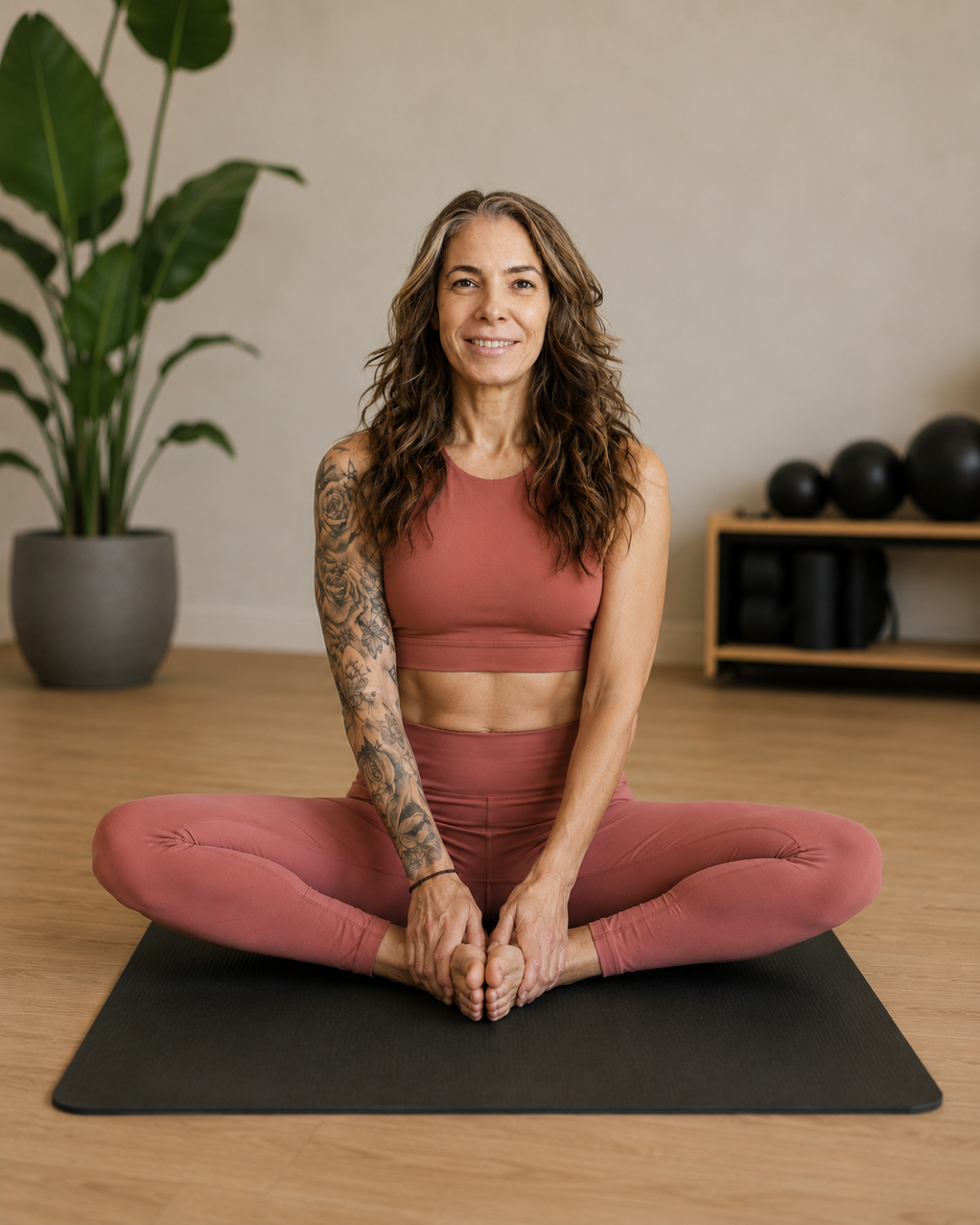
Tracy Richardson MSc is a movement and wellness specialist with a background in therapy, Pilates, and wellbeing, she combines evidence-based practice with a nurturing, mindful approach. Tracy’s mission is to empower individuals to move with awareness, release tension, and cultivate sustainable health, strength, and inner calm. When she’s not teaching or writing, you’ll often find her walking her dog, practising Pilates, or sipping a calming cup of tea.
