10 Things Your Body Should Be Able to Do If You Want to Age Well
Forget your biological age. What about your movement age?
I came across a conversation recently with movement expert Dr Kelly Starrett that got me thinking.
Not about how old we are.
Not about how much we weigh.
Not about whether we can still squeeze ourselves into the jeans we wore ten years ago.
But about something much more useful:
What can your body actually do?
Because when we talk about longevity, I think we sometimes get a little bit obsessed with the number.
Living to 90 sounds wonderful.
But what if you get to 90 and struggle to get off the floor?
What if you can't get up the stairs without stopping?
What if you're frightened of falling?
What if putting your socks on becomes a daily battle?
What if you gradually stop doing the things you love because your body doesn't feel capable anymore?
For me, longevity isn't just about adding years to your life. It's about adding life to those years.
And that means keeping your body capable.
The 10 things I'd want you to think about
Move Better is a class I have developed aimed at the over 65 population and i recently came across Kelly and Juliet Starrett's book Built to Move explores ten movement and lifestyle “vital signs” designed to help us think about how well our bodies are functioning as we age, which is a lot of what we combine into the class. Their approach combines movement, mobility and everyday habits rather than simply asking how fit or strong you are.
I've taken inspiration from that idea and translated it into a very simple question:
How many of these can YOU do?
1. Can you get down onto the floor and back up again?
This is one of my favourites.
Not because getting on and off the floor is some sort of party trick, but because it requires a combination of:
strength
mobility
balance
coordination
body awareness
confidence
And here's the thing… You don't have to be able to do it perfectly.
If you currently need to use your hands, that's information. It isn't a failure. It's simply telling you that there may be an opportunity to work on your strength, mobility and confidence. And that's exactly what movement is for.
2. Can you balance on one leg?
Try standing near something you can hold onto and lift one foot from the floor.
How does it feel?
Easy?
Wobbly?
Do you immediately grab something?
Balance is something we tend to take for granted until we start losing it. But balance isn't just about your ankles.
It's your feet, hips, core, vision, vestibular system, proprioception and nervous system all working together. And the older we get, the more valuable that ability becomes. Balance is a skill worth practising before you need it.
3. Can you squat down comfortably?
I'm not asking whether you can perform a perfect gym squat with a barbell on your back. I'm asking whether your body can comfortably bend your knees and hips, lower your centre of gravity and get back up again.
Think about real life.
Picking something up.
Getting into a low cupboard.
Gardening.
Playing with grandchildren.
Getting in and out of a chair.
Your squat is part of your everyday movement vocabulary. And like any language, use it or gradually lose it.
4. Can you walk comfortably?
Walking is incredibly underrated. We don't need to turn every walk into a workout.
Sometimes the most important thing is simply moving regularly throughout the day.
A ten-minute walk.
Walking to the shops.
Taking the stairs.
Walking the dog.
Getting outside.
Moving after sitting at your desk.
It's the accumulation that matters.
Your body wasn't designed to spend ten hours sitting down and then be expected to perform a 45-minute workout as compensation. Movement needs to be part of your day, not just something you schedule at the gym.
5. Can you move your hips?
Your hips are involved in almost everything.
Walking.
Standing.
Sitting.
Squatting.
Getting out of the car.
Climbing stairs.
Dancing.
And yes… Pilates.
As we age, maintaining useful hip mobility becomes increasingly important for keeping everyday movement accessible. But mobility isn't about forcing yourself into huge stretches. It's about having enough available movement to do the things you want and need to do.
6. Can you move your shoulders and neck freely?
Try looking over your shoulder.
Reach your arms overhead.
Put one hand behind your back.
Can you move without pain, restriction or dramatically compensating somewhere else?
Again, I'm not looking for perfection. I'm interested in function.
Can you reach the top shelf?
Put on a coat?
Wash your hair?
Carry shopping?
Put something into an overhead cupboard?
These are the movements that matter.
7. Can you breathe well?
Breathing is something we do approximately 20,000 times a day. And yet most of us don't give it much thought.
Until we are stressed. Or anxious. Or rushing. Or holding our breath during exercise. Or suddenly realise we've been sitting at a computer with our shoulders around our ears for the last three hours.
Good breathing isn't about taking enormous dramatic breaths all day. It's about having the ability to breathe comfortably and efficiently and being able to use your breath as part of your movement and regulation toolkit.
This is an area I particularly love exploring through Somalates®, because movement and breath are not separate things. They influence one another.
8. Are you strong enough for your real life?
This one is HUGE. And particularly important for women over 45.
Strength isn't just about lifting heavy weights.
It's about being able to carry your shopping.
Lift a suitcase.
Get yourself off the floor.
Carry your grandchildren.
Move furniture.
Climb stairs.
Open a stubborn jar.
Get up from a chair.
Protect your independence.
We don't strength train because we want to become bodybuilders. We strength train because we want to remain capable. And as we move through midlife and beyond, maintaining muscle becomes increasingly important. Your future self will thank you for building strength now.
9. Do you move throughout the day?
This is one of the biggest things I think we overlook.
You can do Pilates three times a week. You can lift weights. You can go to the gym. And still spend the rest of your day sitting.
Your body loves variety.
Stand up.
Walk around.
Stretch.
Reach.
Carry.
Bend.
Rotate.
Change position.
Go outside.
Dance around the kitchen.
Move while you're on the phone.
It all counts. I don't want women to think they have to “exercise harder”. I'd much rather you asked: “How can I move more?”
10. Can you recover?
This one doesn't always make the traditional fitness list. But I think it belongs there. Because longevity isn't just about what you can do. It's also about how well you recover from what you do.
How are you sleeping?
Are you constantly exhausted?
Do you allow yourself rest?
Are you eating enough?
Are you giving your body the nutrients it needs?
Are you constantly pushing through?
And perhaps most importantly for women in midlife: Have you stopped treating exhaustion as a badge of honour?
Your body needs recovery. Rest isn't laziness. Recovery is part of the training.
So… how did you do?
This isn't a pass or fail test. And please don't panic if you couldn't do some of these. That's actually the whole point.
Your body is giving you information. Maybe your balance needs some attention. Maybe your hips are stiff. Maybe you've lost some strength. Maybe you spend far too long sitting. Maybe you need to start walking more. Maybe you need to stop pushing through and start recovering properly. Maybe you need to get curious about your body again.
And that is a much more useful place to start than beating yourself up about what you can't do.
And if you're over 65?
This becomes even more important. As we get older, strength, balance, mobility and confidence can become the difference between doing something independently and needing someone else to help us.
That's why I'm a big believer in keeping movement accessible.
You don't have to be super-fit.
You don't have to touch your toes.
You don't have to get down on the floor.
You don't have to do high-impact exercise.
And you certainly don't have to “keep up” with someone half your age.
You need movement that meets your body where it is today and helps it become a little more capable tomorrow.
This is exactly why I created Move Better.
My Move Better classes are designed with older adults in mind, focusing on the things that really matter:
strength • balance • mobility • coordination • confidence • independence. Because I don't want movement to be something you stop doing as you get older. I want movement to be one of the things that helps you keep doing life.
Whether that's walking with your friends, gardening, travelling, playing with your grandchildren, getting down on the floor, climbing stairs or simply getting out of your chair with confidence. That's what we're working towards.
Your body doesn't need to be younger.
It needs to be capable.
I don't want women over 45 chasing their 25-year-old bodies.
That ship has sailed.
And frankly?
Good.
Because your body at 50 can be stronger, wiser and more resilient than the body you had at 25.
The goal isn't to look younger.
The goal is to keep moving well enough to enjoy the life you have.
So instead of asking: “How old do I look?”
Perhaps we should start asking: “How old does my movement feel?”
Can you get up from the floor?
Can you balance?
Can you squat?
Can you walk?
Can you carry?
Can you reach?
Can you breathe?
Can you recover?
Can you keep doing the things you love?
Because for me, that's longevity.
Not simply living longer.
Living well for longer.
A little inspiration from Kelly Starrett
The ideas in this article were inspired in part by the work of Dr Kelly Starrett and Juliet Starrett and their book Built to Move: The Ten Essential Habits That Will Help You Move Freely and Live Fully. Their work is well worth exploring if you're interested in mobility, healthy ageing and maintaining physical capacity throughout life.
This article is my own interpretation for the Serendipity Wellness® community, with a particular focus on women 45+ and the importance of maintaining strength, mobility, balance and confidence as we age.
Because we're not trying to stop getting older. We're trying to get better at it.
Want to Move Better?
If you're over 65 and want to improve your strength, balance, mobility and confidence in a friendly, supportive environment, come and join us at Move Better.
You don't need to be fit.
You just need to be ready to move.
Serendipity Wellness® — helping you feel stronger, move better and live well at every age.
About Serendipity Wellness®
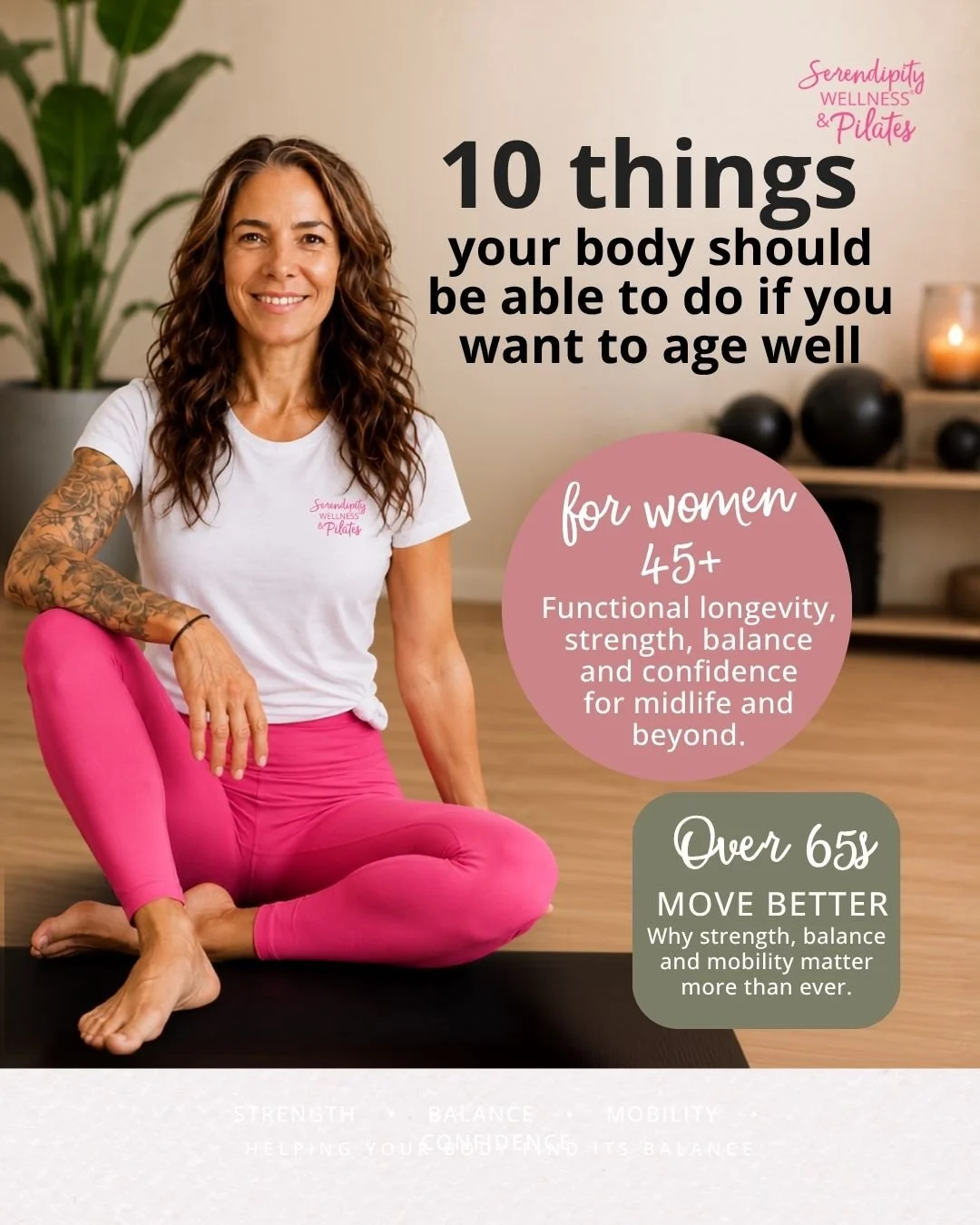
Serendipity Wellness provides Pilates classes, wellness coaching, women’s health support, and holistic wellbeing services across Warwickshire. Founded by Tracy Richardson, the business supports women through movement, mindfulness, midlife wellness, and community connection.
Share This post:
📩 Join The Refuel Newsletter
If you’d like tips, support and a weekly Pitstop to refuel, delivered without noise or trends… join The Refuel.
Each week, I share practical tools to help you move well, recover better, and support your body through change.
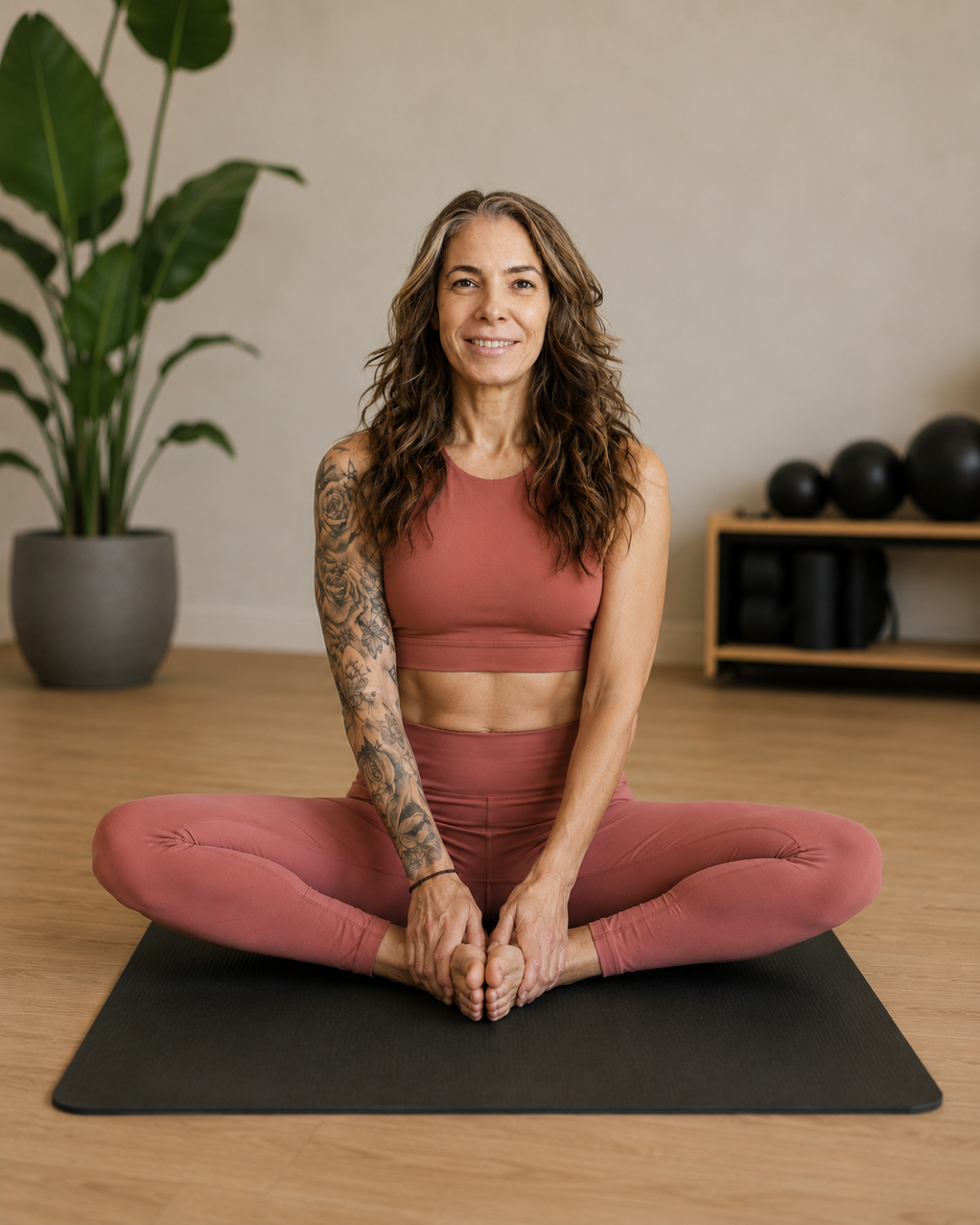
Tracy Richardson MSc is a movement and wellness specialist with a background in therapy, Pilates, and wellbeing, she combines evidence-based practice with a nurturing, mindful approach. Tracy’s mission is to empower individuals to move with awareness, release tension, and cultivate sustainable health, strength, and inner calm. When she’s not teaching or writing, you’ll often find her walking her dog, practising Pilates, or sipping a calming cup of tea.
