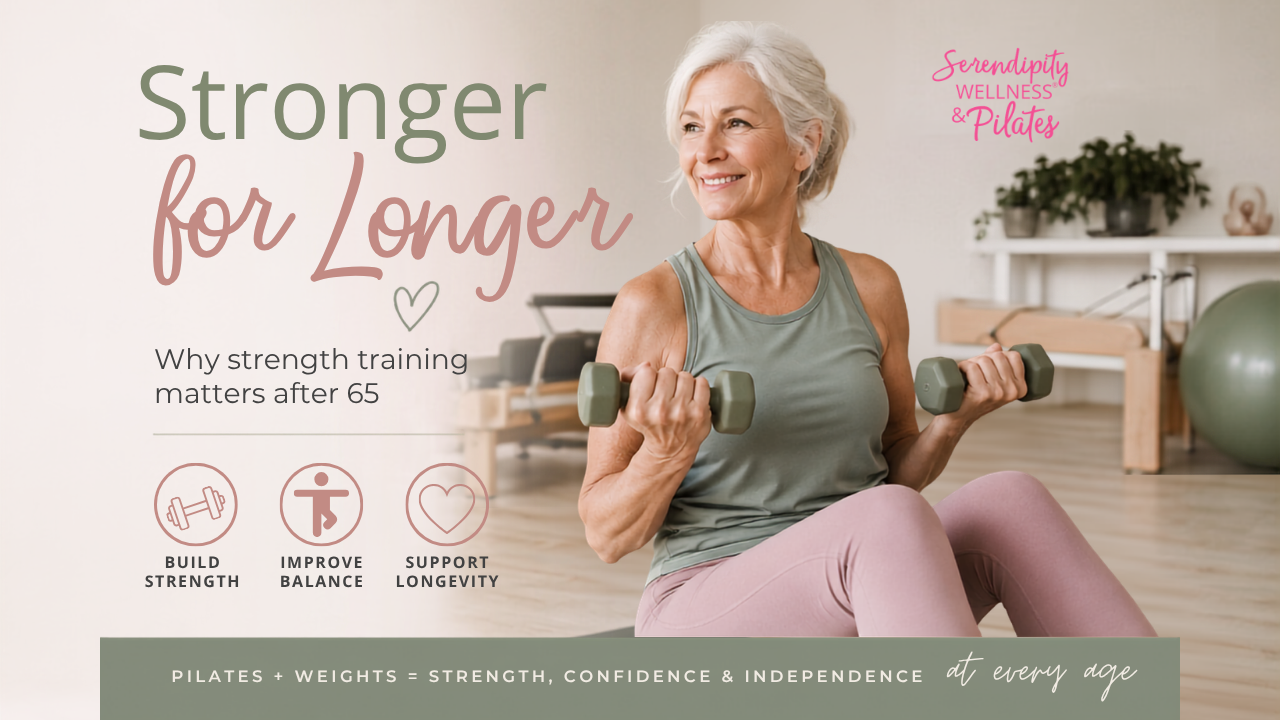
Stronger for Longer: Why Strength Training Matters After 65
Muscle is one of the best investments you can make in your future self.
And no, I don't mean you need to start lifting enormous weights in a gym, wearing Lycra and grunting at the squat rack!
I mean learning how to use your body and, where appropriate, some resistance to keep your muscles strong, your joints moving, your balance challenged and your confidence growing.
Because getting older doesn't mean we should expect to become weaker.
It means we need to become more intentional about maintaining our strength.
And this is something I feel passionately about.
As we move through our 60s, 70s and beyond, maintaining muscle isn't simply about how we look.
It's about being able to:
Get out of a chair without using your hands
Carry your shopping
Climb the stairs
Get up from the floor
Lift something safely
Walk confidently
React if you trip or lose your balance
Stay independent
Keep doing the things you love
Strength isn't about vanity. Strength is about freedom.
WHAT is sarcopenia?
Sarcopenia is the age-related loss of muscle mass, strength and physical function.
Some loss of muscle naturally occurs as we age, but that doesn't mean we're powerless to influence what happens.
This is where resistance and strength training become incredibly important.
The NHS recommends that adults aged 65 and over include activities that improve strength, balance and flexibility at least twice a week. Muscle-strengthening activities can include lifting weights, resistance bands, bodyweight exercise, yoga and Pilates.
The CDC similarly recommends muscle-strengthening activities at least twice a week alongside aerobic and balance activities.
So let's stop thinking of strength training as something reserved for younger people.
It's something we need to keep doing throughout life.
WHY does strength become so important after 65?
Because muscle isn't just about muscle.
It supports almost everything else.
1. Strength helps you stay independent
Think about everyday life.
Standing from the toilet.
Getting out of the car.
Carrying a basket of washing.
Climbing the stairs.
Picking something up from the floor.
Opening a heavy door.
These are all strength movements.
The stronger you are, the easier everyday life tends to become.
And that's what I mean by functional strength.
We're not training just to perform an exercise.
We're training so that life feels easier.
2. Strength can help reduce falls risk
Falls become more significant as we age, and strength and balance exercises are an important part of reducing that risk. The NHS specifically recommends strength and balance activity for older adults, particularly those who have fallen or are worried about falling.
But here's something important:
Balance isn't just standing on one leg.
Your muscles need to be strong enough to help you control your body.
If you stumble, you need the strength and coordination to recover.
If you lose your footing, you need your legs, hips and core to respond.
That's why I love combining strength + Pilates + balance.
We're not just making muscles stronger.
We're teaching the body how to use them.
3. Strength supports healthy ageing
There is a bigger picture here too.
The goal isn't simply to live longer.
It's to have more capable years.
Because what's the point of reaching 85 if we're too weak or unsteady to enjoy the life we've worked so hard to create?
Longevity isn't just about the number of candles on your birthday cake.
It's about your healthspan — how many of those years you can live with strength, mobility, independence and confidence.
WHY Pilates AND WEIGHTS?
I don't think it needs to be one or the other.
In fact, I think they complement each other beautifully.
Pilates gives us:
Control
Learning to move with intention rather than simply throwing your body around.
Core strength
Building strength through the muscles that support your trunk and pelvis.
Mobility
Keeping the body moving well through a useful range of motion.
Posture and body awareness
Understanding where your body is in space and how you're moving it.
Breath
Using breathing to support movement rather than holding your breath and bracing unnecessarily.
Weights give us:
Resistance
Muscles need a reason to adapt.
Progressive challenge
As you become stronger, you can gradually increase the challenge.
Functional strength
Lifting, carrying, pushing and pulling are all things we need in everyday life.
And this is where I think the magic happens.
Pilates teaches you how to move.
Resistance training gives your muscles a reason to get stronger.
We need both.
HOW do we start?
Please don't think you need to walk into a gym and pick up a huge dumbbell.
You don't.
You might start with your own body weight.
Then a light hand weight.
Then a slightly heavier weight when your body is ready.
The important thing is progressive challenge.
Your muscles need to feel that they're being asked to do something.
That doesn't mean pain.
It doesn't mean pushing until you're exhausted.
And it certainly doesn't mean competing with the person next to you.
It means gradually asking your body to do a little more.
Better control.
A few more repetitions.
A little more resistance.
A slightly greater range.
A little less support.
That's how we build capacity.
My TOP 5 strength moves for over 65s
These are five of my favourite functional movements because they target the muscles we rely on every day while giving us opportunities to work on strength, control and balance.
Always work at a level appropriate for you. If you have a medical condition, significant osteoporosis, recent surgery, persistent pain or concerns about your balance, speak with your GP or an appropriately qualified health professional before beginning a new exercise programme.
1. Sit to Stand — your everyday squat
What:
Sit down onto a sturdy chair and stand back up.
You can begin using your body weight and progress by holding a light weight close to your chest.
Why:
This is one of the most functional strength exercises you can do.
Think about how often you stand up and sit down every day!
It works your thighs, glutes and core while also practising the exact movement required for getting out of a chair.
How:
Sit towards the front of a sturdy chair.
Feet about hip-width apart.
Lean your body slightly forward.
Press through your feet and stand tall.
Slowly lower yourself back towards the chair.
Don't collapse into the seat.
That's your strength work.
Try 8–12 controlled repetitions.
As you become stronger, increase the challenge rather than simply rushing through more repetitions.
2. Pilates Bridge — strong hips, strong body
What:
Lie on your back with your knees bent and feet resting on the floor.
Lift your pelvis towards the ceiling and lower with control.
Why:
Your glutes and the muscles around your hips are incredibly important for walking, climbing stairs, standing and maintaining stability.
The bridge is a lovely Pilates movement because we can combine strength with control, breathing and spinal mobility.
How:
Feet hip-width apart.
Gently engage your abdominals.
Press through your feet and lift your pelvis.
Pause at the top.
Lower slowly.
Want more challenge? Add a small weight across the pelvis if appropriate or progress the movement in another way rather than simply doing endless repetitions.
Aim for 8–12 slow, controlled repetitions.
3. Supported Row — build your pulling strength
What:
Using a resistance band or light dumbbells, pull your arms backwards while keeping your chest open.
Why:
We spend a lot of time in front of us.
Driving.
Using phones.
Cooking.
Reading.
Watching television.
Pulling movements help strengthen the muscles of the upper back and shoulders and support the strength we need for everyday tasks.
How:
Sit or stand tall.
Keep your shoulders relaxed.
Draw your elbows backwards, gently squeezing the shoulder blades towards each other.
Return slowly.
Don't shrug.
Don't yank.
Control is the goal.
Start with a resistance that allows you to maintain good technique for around 8–12 repetitions.
4. Step-Up — strength meets balance
What:
Step onto a low, stable step and back down again.
Use a wall, rail or sturdy support if needed.
Why:
This is a fantastic functional movement because stairs aren't going anywhere!
Step-ups challenge the legs and hips while also requiring balance, coordination and weight transfer.
And that's important because falls don't usually happen while we're sitting perfectly still.
Our bodies need to be able to move and react.
How:
Stand facing a low step.
Place one foot firmly onto the step.
Press through that leg to bring the other foot up.
Step back down with control.
Alternate legs.
Start with a low step and plenty of support.
As strength and confidence improve, you can gradually progress the challenge.
5. Calf Raise + Balance — don't forget the lower legs
What:
Stand behind a sturdy chair or near a stable support.
Rise onto the balls of your feet.
Lower slowly.
Then, if appropriate, progress towards briefly standing on one leg with support nearby.
Why:
Your calves and feet play an important role in walking, pushing off the ground and maintaining balance.
And balance is a skill.
It needs to be practised.
How:
Stand tall with your hands lightly resting on a chair.
Rise up onto your toes.
Pause.
Lower slowly.
Repeat 8–15 times.
Then, if safe for you, practise transferring your weight from one foot to the other.
Eventually you might work towards a supported single-leg balance.
But please don't start by standing on one leg in the middle of the kitchen while carrying the shopping!
We build balance progressively too.
The golden rule: don't just exercise; progress
This is the bit I really want you to remember.
If you've been doing the same five exercises with the same tiny weights for five years, you're moving — which is brilliant.
But your body may no longer be receiving enough stimulus to become stronger.
Muscles need challenge.
That challenge can come from:
More resistance
More repetitions
Better range of movement
Slower tempo
Less support
More complex movements
Greater control
You don't have to make everything harder at once.
Choose one thing to progress.
And remember that rest is part of training too.
You don't have to become a bodybuilder
I sometimes think we need to change the language around strength training for older adults.
We're not necessarily trying to build huge muscles.
We're trying to build a body that can cope with life.
A body that can get up.
A body that can carry.
A body that can climb.
A body that can reach.
A body that can recover from a wobble.
A body that feels capable.
And perhaps most importantly…
A body that doesn't make you feel old.
Because age is a number.
Your physical capacity is something you can continue to work on.
Your 65+ strength routine
If you're starting from scratch, don't overwhelm yourself.
Start with two strength sessions a week.
You could combine:
Pilates
for control, mobility, posture, core strength and body awareness.Resistance training
for progressive muscle strengthening.Balance work
to challenge stability and confidence.Walking or other aerobic activity
for cardiovascular fitness and general health.
The NHS recommends that adults 65+ are physically active every day where possible, with strength, balance and flexibility activities on at least two days each week.
And remember…
Something is better than nothing.
You don't need a perfect workout.
You need a body that gets regular opportunities to move, strengthen, balance and recover.
Strong today. Stronger tomorrow.
One of the things I love most about working with older adults is seeing the moment when someone realises:
“Actually… I can do this.”
Maybe they stand up without pushing from the chair.
Maybe they carry their shopping more easily.
Maybe they climb the stairs without stopping.
Maybe they're suddenly more confident walking outside.
Maybe they pick something up from the floor without thinking about it.
These might look like tiny things.
They're not.
They're independence.
And that's why I don't want women — or men — to wait until they feel weak before they start working on their strength.
Start while you can.
Build it while you have it.
Protect it as you age.
Because we're not training simply for today.
We're training for the person we're going to be in 5, 10, 15 or 20 years' time.
And personally?
I want that woman to be strong.
I want her to be able to get up off the floor.
I want her to carry her own bags.
I want her to dance.
I want her to travel.
I want her to climb the stairs.
I want her to feel confident in her body.
I want her to have as many capable, independent and joyful years as possible.
That's what strength training is really about.
Not looking younger.
Not fighting ageing.
Ageing well.
And that, to me, is a much better goal.
A little note from Tracy
If you're over 65 and haven't done strength training before, please don't feel that you've missed the boat.
You haven't.
Your body can still respond to training.
Start where you are.
Work with your current ability.
Build gradually.
And get some expert guidance if you're unsure where to begin.
You don't need to be fit to start.
You start to become stronger.
About Serendipity Wellness®
Serendipity Wellness provides Pilates classes, wellness coaching, women’s health support, and holistic wellbeing services across Warwickshire. Founded by Tracy Richardson, the business supports women through movement, mindfulness, midlife wellness, and community connection.
Share This post:
📩 Join The Refuel Newsletter
If you’d like tips, support and a weekly Pitstop to refuel, delivered without noise or trends… join The Refuel.
Each week, I share practical tools to help you move well, recover better, and support your body through change.
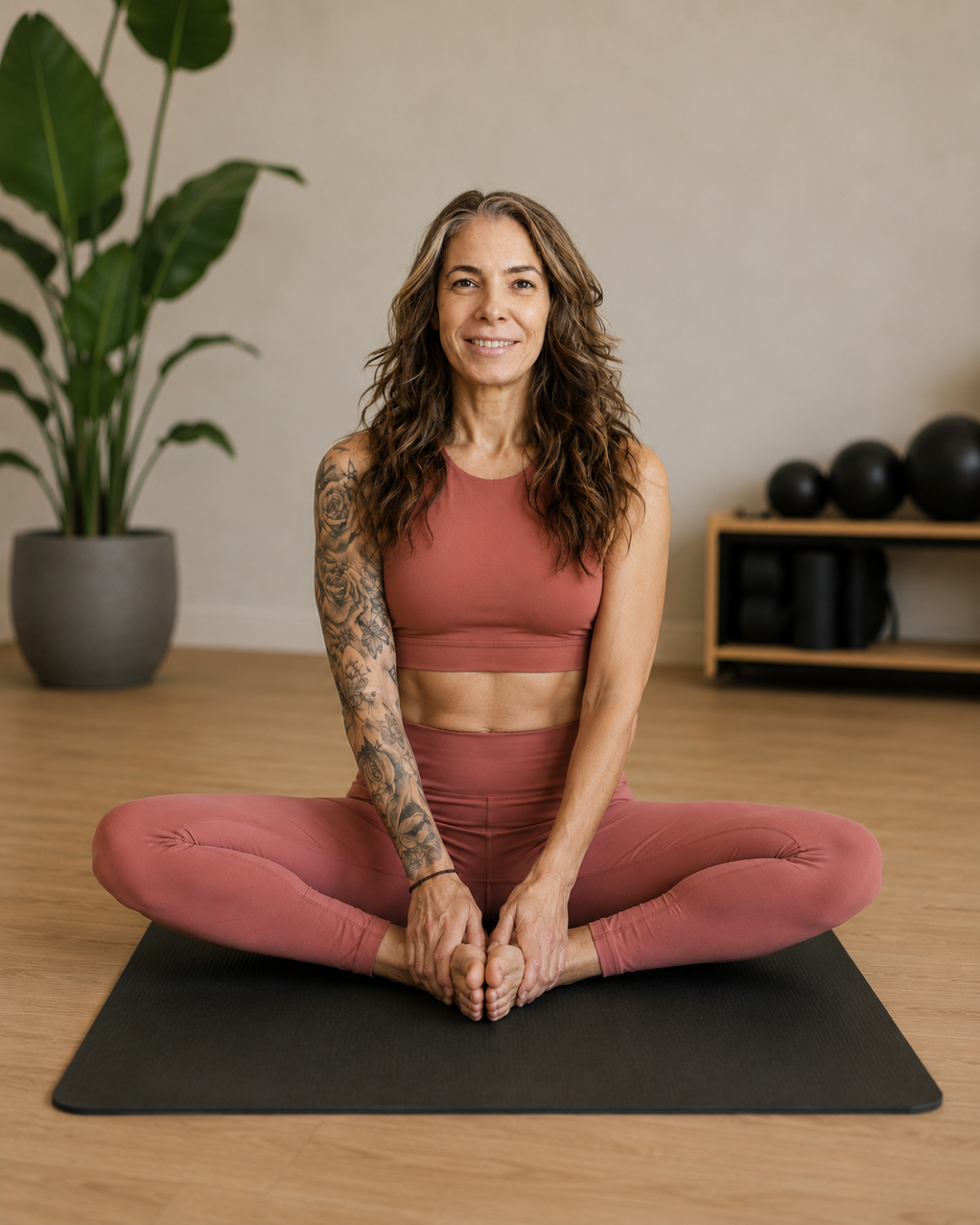
Tracy Richardson MSc is a movement and wellness specialist with a background in therapy, Pilates, and wellbeing, she combines evidence-based practice with a nurturing, mindful approach. Tracy’s mission is to empower individuals to move with awareness, release tension, and cultivate sustainable health, strength, and inner calm. When she’s not teaching or writing, you’ll often find her walking her dog, practising Pilates, or sipping a calming cup of tea.
