

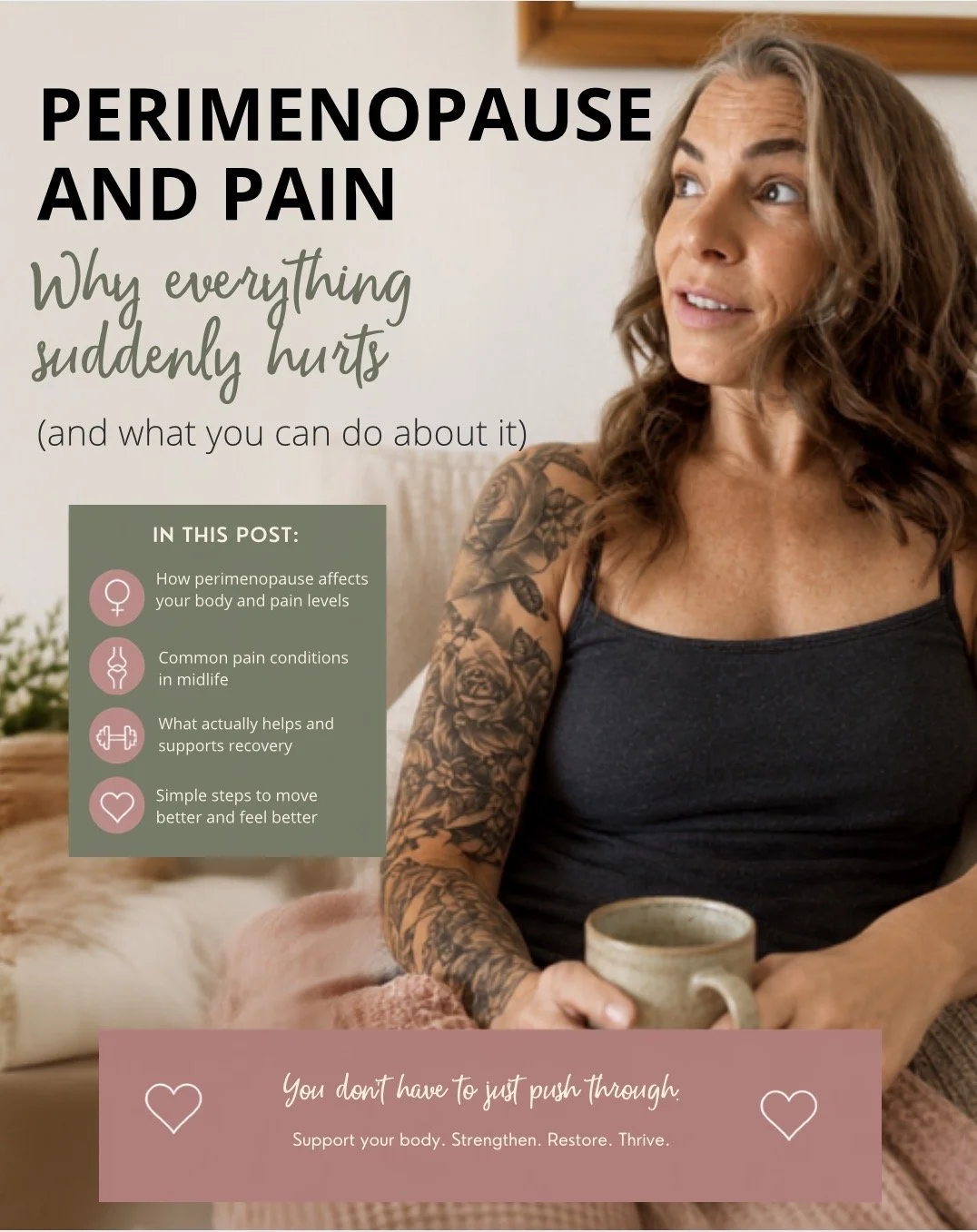
Perimenopause and Pain: Why Everything Suddenly Starts Hurting (And What You Can Do About It)
Have you ever found yourself saying…
“I’ve never had knee pain before.”
“Why does my shoulder suddenly hurt?”
“I haven’t changed anything, so why am I waking up stiff every morning?”
If you’re in your 40s or early 50s, you’re certainly not alone.
Many women notice new aches and pains appearing during perimenopause and simply assume they’re “getting older.”
But here’s the good news…
It’s not all in your head, and it’s not something you simply have to accept.
There are genuine physiological reasons why pain often increases during perimenopause—and understanding them is the first step towards feeling better.
What Is Perimenopause?
Perimenopause is the transitional phase leading up to menopause.
It can begin in your late 30s or 40s and may last anywhere from four to ten years.
During this time, your hormone levels—particularly oestrogen and progesterone—begin to fluctuate dramatically.
Most people associate these changes with hot flushes or irregular periods.
However, one of the most overlooked symptoms is musculoskeletal pain.
Why Does Perimenopause Increase Pain?
Oestrogen influences far more than reproduction.
It also affects:
• Connective tissue health
• Joint lubrication
• Tendons and ligaments
• Muscle recovery
• Bone health
• Inflammation
• Pain sensitivity
As oestrogen fluctuates and gradually declines, these systems can become less efficient.
This may leave you feeling stiffer, more achy and slower to recover than you did just a few years ago.
Common Pain Conditions During Perimenopause
As a Sports Therapist, these are some of the conditions I see most frequently in women over 45.
Frozen Shoulder
One of the strongest links with perimenopause.
Many women develop shoulder stiffness and pain without any obvious injury.
Simple tasks such as fastening a bra or reaching into the back seat become difficult.
Tennis Elbow
Hormonal changes can reduce tendon resilience, making repetitive activities like typing, lifting shopping or gardening much more painful.
Plantar Fasciitis
Heel pain first thing in the morning is incredibly common.
Changes in connective tissue combined with reduced calf flexibility and prolonged standing can contribute.
Achilles Tendon Pain
The Achilles tendon becomes less elastic with age and hormonal change, making walking, running and climbing stairs uncomfortable.
Low Back Pain
Reduced core strength, changing movement patterns, stress and connective tissue changes can all contribute to persistent back pain.
Neck & Upper Back Tension
Stress, poor sleep and hormonal fluctuations often increase muscle tension around the shoulders and neck.
General Joint Pain
Many women report aching hands, hips, knees and feet—particularly on waking.
Often there isn’t a specific injury causing the discomfort.
Why Recovery Takes Longer
One of the biggest frustrations women tell me is:
“I used to bounce back in a day. Now it takes a week.”
There are several reasons for this.
During perimenopause:
• Protein synthesis becomes less efficient.
• Sleep quality often declines.
• Chronic stress increases.
• Tendons repair more slowly.
• Muscle mass naturally decreases.
Recovery simply requires more attention than it used to.
What Actually Helps?
The answer isn’t to stop moving.
In fact, research consistently shows that appropriate movement is one of the best treatments for persistent musculoskeletal pain.
1. Strength Training
Muscle is your greatest protector.
Strong muscles support joints, improve balance and reduce injury risk.
2. Pilates
Pilates improves:
✔ Core strength
✔ Mobility
✔ Balance
✔ Posture
✔ Body awareness
✔ Movement confidence
It’s one of the reasons I love teaching it to women in midlife.
3. Keep Walking
Walking improves circulation, lubricates joints and supports both physical and mental wellbeing.
4. Prioritise Protein
Protein supports muscle repair, tendon health and healthy ageing.
Many women simply aren’t eating enough.
5. Sleep Matters
Sleep is when much of your body’s repair work happens.
Improving sleep quality often improves pain too.
6. Manage Stress
Stress increases muscle tension and can amplify pain.
Breathwork, mindfulness, Pilates and spending time outdoors can all help calm your nervous system.
7. Don’t Ignore Persistent Pain
Pain lasting more than a few weeks deserves assessment.
Early intervention is often much easier than waiting until movement becomes severely restricted.
The Good News
Perimenopause doesn’t mean your body is falling apart.
It means your body is changing.
With the right movement, strength training, nutrition and recovery strategies, many women find they actually move better in their 50s than they did in their 40s.
The goal isn’t simply to manage pain.
It’s to build a body that feels strong, capable and confident for the decades ahead.
At Serendipity Wellness®, that’s exactly what I aim to help women achieve.
Because growing older shouldn’t mean giving up the activities you love—it should mean learning how to support your body in new and empowering ways.
Ready to Move Better?
If you’re struggling with aches, pains or stiffness during perimenopause, remember: you don’t have to navigate it alone.
Through Pilates, evidence-informed movement and practical lifestyle advice, it’s possible to reduce pain, improve confidence and reconnect with your body.
Small changes, practised consistently, often lead to the biggest transformations.
About Serendipity Wellness®
Serendipity Wellness provides Pilates classes, wellness coaching, women’s health support, and holistic wellbeing services across Warwickshire. Founded by Tracy Richardson, the business supports women through movement, mindfulness, midlife wellness, and community connection.
Share This post:
📩 Join The Refuel Newsletter
If you’d like tips, support and a weekly Pitstop to refuel, delivered without noise or trends… join The Refuel.
Each week, I share practical tools to help you move well, recover better, and support your body through change.
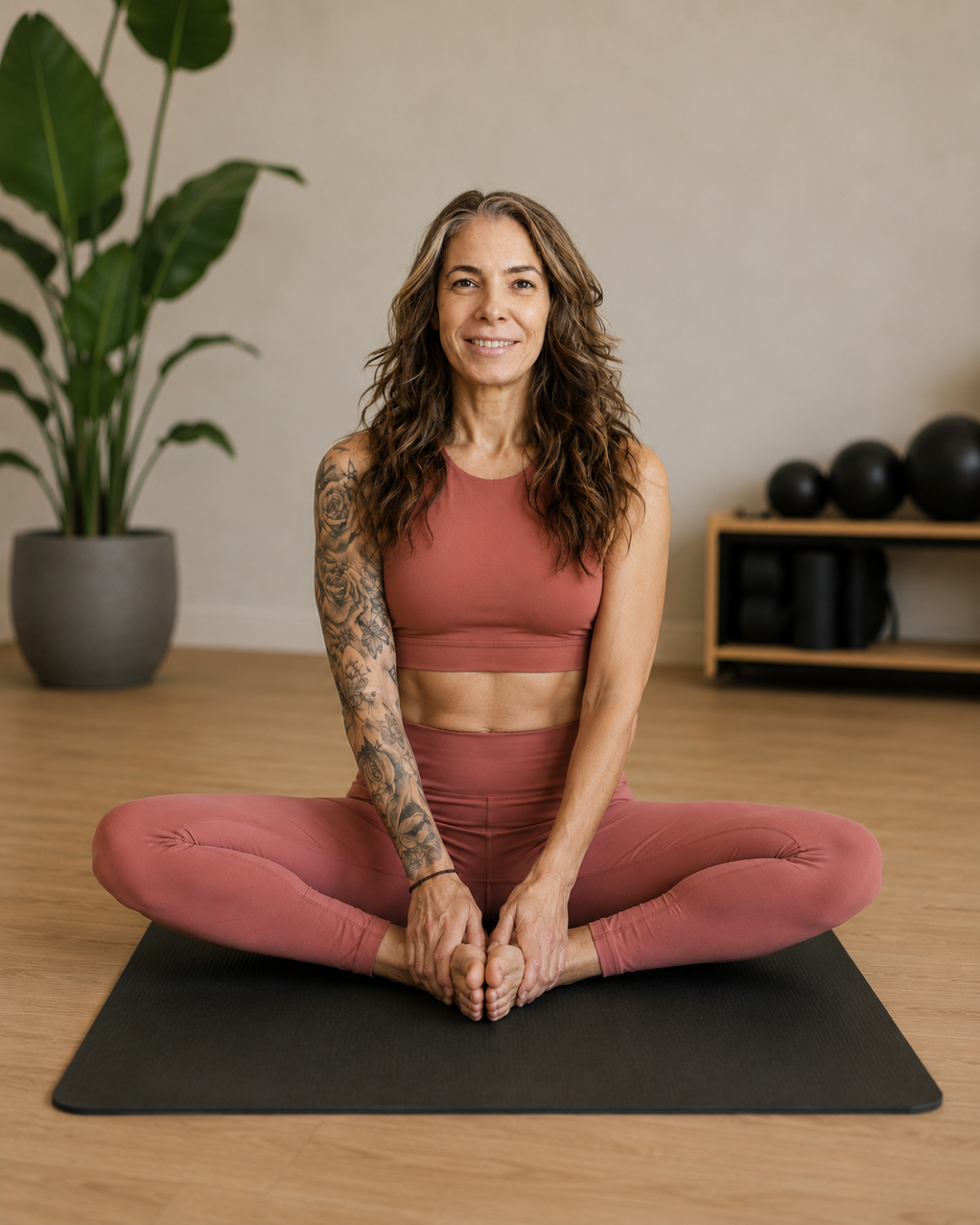
Tracy Richardson MSc is a movement and wellness specialist with a background in therapy, Pilates, and wellbeing, she combines evidence-based practice with a nurturing, mindful approach. Tracy’s mission is to empower individuals to move with awareness, release tension, and cultivate sustainable health, strength, and inner calm. When she’s not teaching or writing, you’ll often find her walking her dog, practising Pilates, or sipping a calming cup of tea.
