

Pilates, Your Deep Core and Pelvic Floor: Can It Really Help Urinary Incontinence?
Let's talk about something that affects millions of women but is still rarely discussed openly.
Have you ever crossed your legs before you sneezed?
Avoided jumping with your grandchildren?
Checked where the nearest toilet was before leaving the house?
Or perhaps you've quietly accepted that leaking urine is "just part of getting older" or "what happens after having children."
If this sounds familiar, you're not alone.
In fact, urinary incontinence affects around one in three women at some point in their lives, with prevalence increasing during perimenopause and menopause.
The good news?
For many women, the right exercise programme can make a significant difference.
As a Sports Therapist and Pilates Teacher, I'm often asked whether Pilates strengthens the pelvic floor—and whether it's enough to treat bladder leakage.
The answer is a little more nuanced than a simple yes or no.
First, What Is the Pelvic Floor?
Your pelvic floor is a group of muscles that sit like a supportive hammock at the base of your pelvis.
These muscles help to:
Support your bladder, bowel and uterus
Maintain continence
Contribute to sexual function
Work alongside your diaphragm, deep abdominal muscles and back muscles to provide stability
The pelvic floor doesn't work in isolation.
It's part of what many professionals now describe as your deep core system.
What Is Your Deep Core?
When people think about their core, they often picture six-pack abs.
In reality, your deepest stabilising muscles include:
✔️ The diaphragm
✔️ The pelvic floor
✔️ The transversus abdominis (your deepest abdominal muscle)
✔️ The multifidus muscles along the spine
These muscles work together to manage pressure inside the abdomen and provide stability during everyday movement.
Think of them as a team rather than individual muscles.
Why Does Urinary Incontinence Become More Common During Perimenopause?
Hormonal changes play a significant role.
As oestrogen declines, tissues around the bladder, urethra and pelvic floor become less elastic and less well supported.
You may also experience:
Reduced muscle mass
Slower tissue recovery
Changes in collagen
Increased abdominal pressure from weight gain
Chronic coughing
Constipation
Reduced physical activity
Together, these changes can increase the likelihood of bladder leakage.
Does Pilates Strengthen the Pelvic Floor?
This is where the evidence becomes really interesting.
Many Pilates exercises encourage coordinated breathing, postural control and activation of the deep core.
Because the pelvic floor naturally works alongside the diaphragm and transversus abdominis during movement, Pilates may improve pelvic floor function in some women. Systematic reviews suggest Pilates can improve pelvic floor muscle function, although the quality of evidence is variable and more high-quality studies are needed. (PubMed)
However…
Pilates should not be viewed as a replacement for specific pelvic floor muscle training (PFMT) when urinary incontinence is present.
What Does the Research Actually Say?
This is where myths often creep in.
Some people claim that simply activating your deep core automatically strengthens your pelvic floor enough to stop bladder leakage.
Current evidence does not support that conclusion.
High-quality evidence shows that pelvic floor muscle training (PFMT) is the first-line conservative treatment for urinary incontinence in women and can significantly improve or even cure symptoms for many women. (Cochrane)
Research also suggests that training the transversus abdominis (your deepest abdominal muscle) instead of, or in addition to, pelvic floor exercises has not consistently shown extra benefit for treating urinary incontinence. (PubMed)
That's an important distinction.
So Is Pilates Worth Doing?
Absolutely.
Pilates offers many benefits that support bladder health, even if it isn't a substitute for targeted pelvic floor rehabilitation.
Pilates can help improve:
✔ Better posture
✔ Breathing mechanics
✔ Deep core coordination
✔ Hip and pelvic stability
✔ Functional strength
✔ Confidence with movement
✔ Balance and fall prevention
For many women, this creates a stronger, more resilient body overall.
But if you're leaking urine regularly, I'd encourage combining Pilates with individualised pelvic floor muscle training, ideally under the guidance of a pelvic health physiotherapist.
It's Not Always About Strength
This surprises many women.
Not every pelvic floor is weak.
Some are actually too tight.
An overactive or hypertonic pelvic floor can also contribute to bladder symptoms, pelvic pain and difficulty emptying the bladder.
That's why endlessly doing "Kegels" without assessment isn't always the answer.
A pelvic floor needs to be able to:
Contract
Relax
Coordinate with breathing
Respond automatically during movement
Function matters more than simply squeezing harder.
5 Ways Pilates Can Support Pelvic Floor Health
1. Learn to Breathe Well
Your diaphragm and pelvic floor move together.
As you inhale, the pelvic floor gently lengthens.
As you exhale, it naturally recoils.
Learning this rhythm is often more valuable than clenching all day.
2. Improve Posture
Standing taller changes how forces travel through your spine, pelvis and abdominal wall.
3. Build Functional Strength
Your body works as a whole.
Strong hips, glutes and deep abdominal muscles reduce unnecessary strain elsewhere.
4. Reduce Pressure
One of the biggest mistakes I see is people holding their breath during exercise.
Learning to exhale during effort helps manage pressure through the abdomen and pelvic floor.
5. Keep Moving
Regular movement supports healthy tissues, circulation, confidence and overall wellbeing.
When Should You Seek Professional Help?
Please don't assume leaking is "normal."
Speak to your GP or a pelvic health physiotherapist if you experience:
Leakage when coughing, sneezing or exercising
Urgency that makes it difficult to reach the toilet
Frequent bladder infections
Pelvic heaviness or a feeling of bulging
Persistent pelvic pain
These symptoms deserve assessment, and in many cases, effective treatment is available.
My Take as a Pilates Teacher and Sports Therapist
Pilates is a fantastic way to build strength, improve movement quality and reconnect with your body during midlife.
But it's important to be honest about what the evidence tells us.
Pilates supports pelvic floor health.
Specific pelvic floor muscle training remains the gold standard first-line exercise treatment for urinary incontinence.
When we combine evidence-based pelvic floor rehabilitation with good movement, breathing, strength training and healthy lifestyle habits, we give women the best opportunity to regain confidence and reduce symptoms.
Because no woman should stop laughing, exercising or living life because she's worried about leaking urine.
Ready to Move with Confidence?
At Serendipity Wellness®, my Pilates classes are designed to help women over 45 build strength, improve posture, move with confidence and reconnect with their bodies.
If you're experiencing urinary incontinence, remember: you're not alone, and help is available. The right combination of movement, education and professional support can make a meaningful difference.
References
Cochrane Review: Pelvic floor muscle training for urinary incontinence in women (2018). (Cochrane)
Bø K et al. Evidence for benefit of transversus abdominis training alone or in combination with pelvic floor muscle training (Systematic Review). (PubMed)
Systematic review: Effects of the Pilates method on pelvic floor muscles. (PubMed)

About Serendipity Wellness®
Serendipity Wellness provides Pilates classes, wellness coaching, women’s health support, and holistic wellbeing services across Warwickshire. Founded by Tracy Richardson, the business supports women through movement, mindfulness, midlife wellness, and community connection.
Share This post:
📩 Join The Refuel Newsletter
If you’d like tips, support and a weekly Pitstop to refuel, delivered without noise or trends… join The Refuel.
Each week, I share practical tools to help you move well, recover better, and support your body through change.
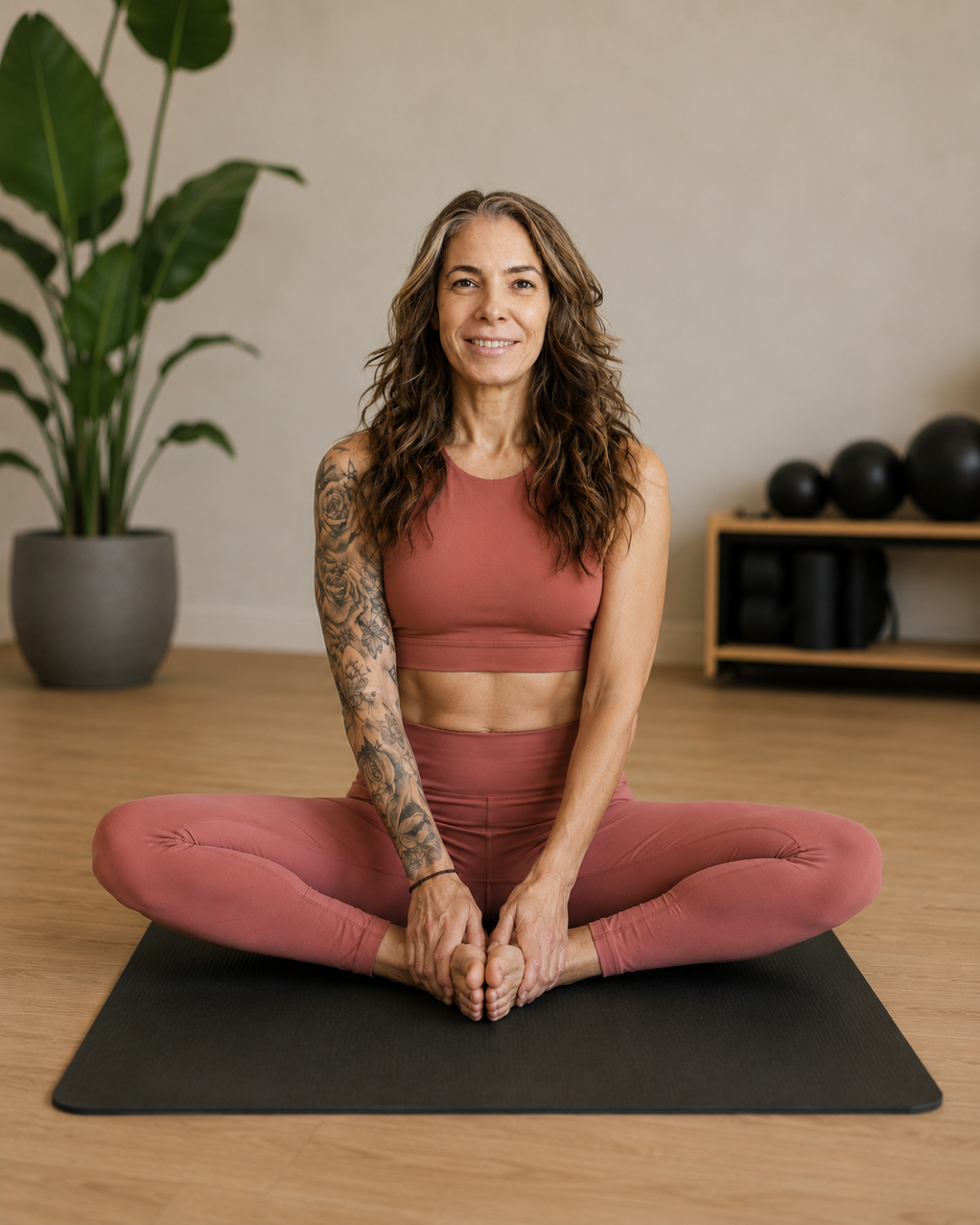
Tracy Richardson MSc is a movement and wellness specialist with a background in therapy, Pilates, and wellbeing, she combines evidence-based practice with a nurturing, mindful approach. Tracy’s mission is to empower individuals to move with awareness, release tension, and cultivate sustainable health, strength, and inner calm. When she’s not teaching or writing, you’ll often find her walking her dog, practising Pilates, or sipping a calming cup of tea.
