

Why women over 40 need to rethink exercise, recovery and what it really means to be fit.
There comes a point in life when the exercise routine that once worked brilliantly doesn't always feel quite right anymore.
Perhaps you used to bounce out of bed after a tough workout, but now you need a little longer to recover. Maybe you're finding that your energy levels fluctuate, your sleep isn't quite what it used to be, or the workouts you once loved leave you feeling exhausted rather than energised.
You might even find yourself wondering whether you're losing your fitness.
Here's something I'd like you to consider:
What if you're not losing your fitness? What if your body is simply asking for a different approach?
For women in their 40s and 50s, fitness can become a rather different experience. Hormonal changes, muscle loss, changes in sleep, increased life demands and differences in recovery can all influence how we feel when we exercise.
But this isn't a reason to slow down, give up or accept that feeling less capable is simply part of getting older.
Quite the opposite.
It's an opportunity to become more intentional about how we move, how we train and how we look after ourselves.
And perhaps, for the first time, to make exercise about supporting the body we have rather than trying to get back the body we used to have.
1. Your body is changing and your exercise routine may need to change too
The years leading up to menopause, known as perimenopause, can bring significant hormonal fluctuations.
Oestrogen plays several important roles in the body, including supporting bone health, muscle function and connective tissue. As hormone levels fluctuate and eventually decline, some women notice changes in their strength, recovery, body composition, sleep and energy.
It's important to remember that not every woman experiences these changes in the same way.
However, the transition through midlife is a useful time to reassess your exercise habits.
You may notice:
Greater fluctuations in energy and motivation.
Changes in body composition, particularly around the abdomen.
Reduced muscle strength if you aren't regularly challenging your muscles.
Changes in sleep quality and recovery.
Increased stiffness or reduced mobility.
A different tolerance for exercise intensity.
This doesn't mean exercise is suddenly less effective.
It means that understanding your body becomes increasingly important.
Rather than automatically increasing intensity or adding more workouts, think about the quality, variety and purpose of your movement.
2. Muscle is one of your greatest assets in midlife
If there's one thing I'd encourage every woman over 40 to prioritise, it's maintaining and building muscle.
Muscle isn't just about appearance, toned arms or fitting into a particular pair of jeans.
Skeletal muscle is essential for everyday function. It helps us climb stairs, carry shopping, get up from the floor, maintain balance and remain physically independent as we age.
Muscle also plays an important role in glucose regulation and metabolic health.
From around our 30s, we can gradually lose muscle mass and strength if we don't actively maintain them. This process can become more pronounced with age, particularly when combined with inactivity and hormonal changes.
The good news?
Muscle is adaptable. At almost any age, your body can respond to appropriate strength training.
Resistance training provides a stimulus for muscles to adapt, become stronger and improve their capacity to cope with everyday demands.
This is why your fitness routine should include some form of progressive resistance exercise.
That could mean:
Using hand weights.
Working with resistance bands.
Performing bodyweight exercises.
Practising Pilates exercises that challenge muscular strength.
Using resistance machines or working with a qualified strength coach.
You don't need to lift the heaviest weights in the gym.
You do need to challenge your muscles appropriately and progressively.
The goal is to build a body that can support you throughout the decades ahead.
3. Stop measuring fitness by how exhausted you feel
Somewhere along the way, we've developed the idea that a successful workout should leave us breathless, sweaty and completely exhausted.
But exhaustion isn't a measure of effectiveness.
A workout doesn't need to leave you crawling off the mat to be worthwhile.
In fact, constantly pushing yourself to exhaustion without allowing adequate recovery can make it harder to maintain a consistent exercise routine.
Exercise is a stressor. That's not necessarily a bad thing. Physical activity creates a stimulus that encourages the body to adapt.
However, the adaptation happens through a combination of training and recovery.
Sleep, nutrition, rest and appropriate training intensity all contribute to the process.
This is particularly relevant during midlife, when poor sleep, work pressures, caring responsibilities and hormonal symptoms may already be placing additional demands on your body.
Instead of asking:
How hard can I push myself today?
Try asking:
What does my body need from me today?
Some days that might be a challenging strength session.
Other days it might be a Pilates class, a walk or some gentle mobility work.
Neither is a wasted workout.
Learning to distinguish between a day when you need a challenge and a day when you need recovery is an important part of developing a sustainable relationship with exercise.
4. Pilates isn't just stretching, it's intelligent movement
Pilates is sometimes misunderstood as a gentle form of stretching or an exercise reserved for people who don't enjoy more traditional fitness activities.
But properly taught Pilates can offer much more.
Pilates develops strength, control, coordination, balance, mobility and body awareness.
It encourages you to work with your breath, develop movement precision and build strength through controlled, purposeful exercises.
For women over 40, this combination can be particularly valuable.
Pilates can help you:
Develop better core strength and control.
Improve balance and coordination.
Build muscular endurance.
Develop mobility and movement confidence.
Improve awareness of posture and movement patterns.
Create a more connected relationship with your body.
However, it's worth making one important distinction.
Not every Pilates class provides the same strength stimulus as progressive resistance training.
If building and maintaining muscle is a priority, consider incorporating appropriately challenging resistance work alongside Pilates.
Think of them as complementary rather than competing approaches.
You don't have to choose between being strong and being mobile. Both matter.
5. Cardio still matters, but it doesn't have to mean HIIT
Cardiovascular fitness remains incredibly important throughout midlife.
Your heart, lungs and circulatory system benefit from regular aerobic activity. It supports cardiovascular health, metabolic function and overall physical capacity.
But cardiovascular exercise doesn't have to mean high-intensity interval training, endless burpees or punishing workouts.
Walking, cycling, swimming, dancing and other activities that raise your heart rate can all contribute to aerobic fitness.
For general health, UK physical activity guidelines recommend that adults aim for:
At least 150 minutes of moderate-intensity activity each week, or 75 minutes of vigorous activity, or an equivalent combination.
Muscle-strengthening activities involving all major muscle groups on at least two days each week.
Reducing prolonged periods of sedentary behaviour.
Moderate-intensity activity generally means you can talk but not sing comfortably while moving.
And remember, those 150 minutes don't need to happen in one go.
A 20-minute walk, a Pilates class, a lunchtime movement break and a weekend cycle all contribute.
The most effective exercise routine is one you can realistically maintain.
6. Recovery is part of your training, not a reward for finishing it
Let's talk about recovery.
Because this is something that often gets overlooked, particularly by women who are used to juggling work, family, responsibilities and everyone else's needs.
We can become very good at squeezing exercise into an already busy day, but not quite so good at making space for recovery.
Recovery isn't laziness.
It's an essential part of how the body adapts to exercise.
A few things deserve particular attention during midlife:
Sleep
Sleep supports tissue repair, metabolic health, immune function and cognitive wellbeing. Hormonal changes can affect sleep quality, making good sleep habits particularly important.
Nutrition
Your body needs sufficient energy, protein and a variety of nutrients to support muscle maintenance, recovery and general health.
Protein is particularly important because it supplies the amino acids needed for muscle repair and adaptation.
Include good sources of protein throughout the day rather than leaving most of your intake until your evening meal.
Rest days
You don't need to train hard every day. Allowing time between demanding strength sessions can help your muscles recover and adapt.
Stress management
Physical and psychological stress both place demands on the body. Walking, breathing exercises, gentle movement and time outdoors can all form part of a balanced approach to wellbeing.
And please remember: if you're experiencing persistent fatigue, dizziness, unusual breathlessness or a significant change in exercise tolerance, don't automatically put it down to hormones or getting older. Seek appropriate medical advice.
7. Mobility and balance are investments in your future
When we think about fitness, we often focus on strength, weight and cardiovascular endurance.
But there's another aspect of fitness that deserves far more attention: the ability to move confidently and comfortably.
Mobility and balance are important throughout life.
They influence how easily we move, how confidently we navigate different environments and how well we manage everyday activities.
Consider the movements you perform without thinking:
Getting up from a chair.
Reaching overhead.
Turning to look behind you.
Walking on uneven ground.
Stepping up and down.
Getting down to the floor and back up again.
These are all physical skills worth maintaining.
Balance exercises, single-leg movements, controlled transitions and mobility work can all help develop these abilities.
This is one of the reasons I love incorporating functional movement into Pilates.
We're not simply exercising for the sake of completing a workout. We're developing skills that have a purpose beyond the studio.
Because fitness isn't just about what you can do today.
It's about preserving what you want to be able to do in 10, 20 or 30 years.
8. Consistency beats perfection
Here's something I want you to take away from this article.
You don't need a perfect exercise routine.
You don't need to exercise for an hour every day.
You don't need to spend your weekends recovering from a workout.
And you certainly don't need to punish yourself because you missed a session.
What you need is consistency.
A realistic routine that includes strength, cardiovascular activity, mobility and recovery will generally serve you better than an ambitious programme you can only maintain for three weeks.
Start with what you can manage.
Build gradually.
Find movement you enjoy.
Make it part of your lifestyle rather than another item on your never-ending to-do list.
And stop comparing your current body to a version of yourself from 20 years ago.
That body had different hormones, different responsibilities, different experiences and a different stage of life.
Your body now deserves just as much attention, care and respect.
So, what should your midlife fitness routine actually look like?
There isn't one perfect programme for every woman, but a balanced weekly routine could include:
ActivitySuggested frequencyWhy it mattersStrength training2–3 sessionsMuscle and bone healthPilates1–3 sessionsStrength, control and mobilityWalking or cardioRegularly throughout the weekCardiovascular healthBalance and mobilitySeveral short sessionsMovement confidence and coordinationRecoveryAs neededAdaptation and wellbeing
These activities can overlap. A Pilates class may contribute to muscular endurance and mobility, while a brisk walk contributes to aerobic activity.
Adapt the frequency and intensity to your current fitness, health, experience and recovery needs.
If you're new to exercise, start gently and build up. If you have existing health concerns or injuries, seek appropriate professional guidance before changing your routine.
A little reminder from me
I think one of the biggest mistakes we can make as women is believing that our best years of physical fitness are behind us.
They're not.
Your body may be changing. Your priorities may be changing. Your capacity to recover may be different.
But you can still become stronger.
You can improve your cardiovascular fitness.
You can develop better balance, coordination and mobility.
You can discover new ways of moving that you genuinely enjoy.
And you can build a relationship with exercise that isn't based on guilt, punishment, comparison or chasing a number on the scales.
At Serendipity Wellness®, I believe movement should help you feel more connected to your body, not more frustrated by it.
That's why my approach to Pilates and Somalates® focuses on mindful, purposeful movement, building confidence and supporting your body through the different stages of life.
Because Pilates isn't about getting your 26-year-old body back.
It's about keeping your 46-year-old body well, so your 76-year-old body can get up off the floor, enjoy a walk, carry the shopping and live life with confidence.
We're not exercising to turn back the clock. We're moving to make the years ahead better.
And that, to me, is what fitness in midlife should really be about.
Ready to move differently?
Whether you're returning to exercise, starting Pilates for the first time or looking for a more balanced approach to fitness, Serendipity Wellness® offers welcoming community Pilates classes, mindful movement and online options through the Pilates Pyjama Club.
You don't need to be fit to start. You just need to start where you are. Come and join us in class here
Move well. Feel well. Live well.
Tracy Richardson MSc
Founder of Serendipity Wellness® | Pilates Teacher | Creator of Somalates®
About Serendipity Wellness®
Serendipity Wellness provides Pilates classes, wellness coaching, women’s health support, and holistic wellbeing services across Warwickshire. Founded by Tracy Richardson, the business supports women through movement, mindfulness, midlife wellness, and community connection.
Share This post:
📩 Join The Refuel Newsletter
If you’d like tips, support and a weekly Pitstop to refuel, delivered without noise or trends… join The Refuel.
Each week, I share practical tools to help you move well, recover better, and support your body through change.
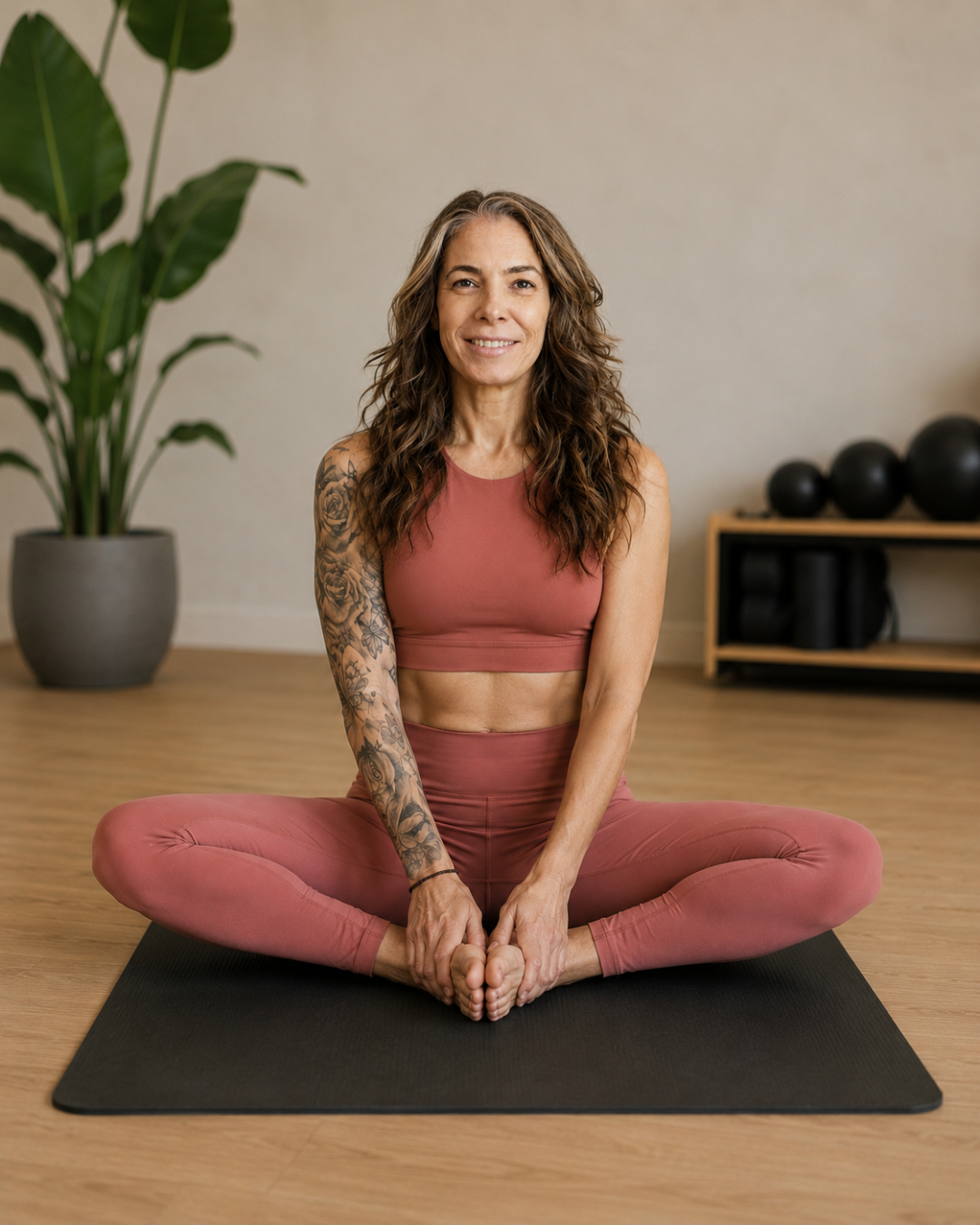
Tracy Richardson MSc is a movement and wellness specialist with a background in therapy, Pilates, and wellbeing, she combines evidence-based practice with a nurturing, mindful approach. Tracy’s mission is to empower individuals to move with awareness, release tension, and cultivate sustainable health, strength, and inner calm. When she’s not teaching or writing, you’ll often find her walking her dog, practising Pilates, or sipping a calming cup of tea.
